
There I was, standing in the oatmeal aisle at 10 AM, looking for something that should be simple: whole grain oats. Big, fluffy, fiber-loaded steel cut oats. The kind that make instant oatmeal look like flavored sand. The kind proven to actually change your cholesterol profile. What I found instead was a masterclass in food industry deception.
Four legitimate options. Maybe five if I'm being generous. The rest? An entire section of the aisle dedicated to what I can only describe as candy bars cosplaying as breakfast food.
This isn't just about oatmeal. This pattern repeats across the entire store. Yogurt. Bread. Granola bars. The "health food" sections are often the most dangerous places for someone actually trying to eat well. Let me break down the science of why your basic choices might be working against you, and how to spot the imposters.
The Oatmeal Deception: Steel Cut vs. Instant
Let me paint the picture. Steel cut oats look like little grain nuggets. They take 10 to 20 minutes to cook. They have a chewy, nutty texture that actually feels like food. Quick oats look like paper thin flakes that dissolve in hot water. They cook in 90 seconds because they've already been processed to oblivion.
"But they're both oats!" you might say. Technically, yes. But here's where the science gets interesting.

The Glycemic Index Problem
A study published in the Journal of the American College of Nutrition measured the glycemic response to different oat preparations and found significant differences (Granfeldt et al., 2000). Steel cut oats have a glycemic index around 42 to 50. Instant oatmeal? Closer to 79 to 83. That's a massive difference.
Why does this matter? When you eat something with a high glycemic index, your blood sugar spikes rapidly. Your pancreas dumps insulin to deal with it. Then you crash. Then you're hungry again an hour later, reaching for a snack. It's a hormonal rollercoaster that makes sustaining energy and managing appetite nearly impossible.
Steel cut oats release glucose slowly and steadily. You stay full longer. Your energy stays stable. Your insulin response is measured rather than panicked. This isn't just theory. A 2015 study in Nutrients found that intact whole grains produced significantly lower postprandial glucose responses compared to processed versions of the same grains (Åberg et al., 2015).
The Fiber Factor
Here's where it gets even better. Steel cut oats retain more of their original fiber structure, particularly the beta-glucan that makes oats special. Beta-glucan is the soluble fiber that the FDA actually allows oat manufacturers to make health claims about. It's proven to lower LDL cholesterol.
A meta-analysis published in the American Journal of Clinical Nutrition examined 28 randomized controlled trials and found that oat beta-glucan significantly reduced both total and LDL cholesterol (Whitehead et al., 2014). But here's the catch: the fiber structure matters. When oats are processed into instant form, the physical structure of the beta-glucan matrix is disrupted, potentially affecting its cholesterol-lowering efficacy.
"The food industry excels at taking something healthy and processing it into something convenient but nutritionally compromised. Steel cut oats take longer to cook because they haven't been pre-digested for you."
The Yogurt Wasteland: Real vs. Dessert in Disguise
Walk into any grocery store's yogurt section and you'll find what looks like variety. Strawberry! Blueberry! Key Lime Pie! Birthday Cake! Wait, what? When did breakfast become an excuse to eat cake?
Here's the reality check. A container of Fage Total 0% plain Greek yogurt has about 90 calories, 18g of protein, and 4g of naturally occurring sugar from lactose. A typical flavored yogurt cup from the same general section? Often 150 to 200 calories, 5 to 7g of protein, and 20 to 25g of sugar. Some of those "light" options that seem healthier just swap sugar for artificial sweeteners and still deliver minimal protein.

The Protein Math
Let's do some basic math. If you're trying to hit a reasonable protein target of 0.7 to 1g per pound of bodyweight, protein density matters. Plain Greek yogurt gives you roughly 10g of protein per 100 calories. Flavored yogurt gives you about 3 to 4g per 100 calories. To get the same protein from flavored yogurt, you'd need to eat three times as many calories.
A study in Appetite compared satiety responses to different yogurt formulations and found that high-protein Greek yogurt led to significantly greater fullness and reduced subsequent food intake compared to lower-protein alternatives (Douglas et al., 2013). More protein, more satisfaction, fewer cravings. The math works.
The Probiotic Question
"But my flavored yogurt has probiotics!" Sure, maybe. But so does the plain stuff. And the plain stuff isn't also delivering a sugar bomb that may feed the exact gut bacteria you're trying to outcompete. A study in Cell found that high sugar intake can shift the gut microbiome toward less favorable compositions (Sonnenburg & Bäckhed, 2016). You're essentially trying to plant flowers while pouring weed killer on the soil.
The Simple Solution
Buy plain Greek yogurt. Add your own berries. Blueberries, raspberries, blackberries: they're antioxidant-rich and lower glycemic than most fruits. Dried berries work great too when fresh aren't available. Control your own destiny. If you need more sweetness, add a small amount of local honey. You'll still come out ahead on sugar while getting actual nutrition.
The Honey Advantage: Why Local and Raw Matters
Speaking of sweeteners, let's talk about why local honey beats the processed alternatives. Not all sugars are created equal, and the source matters more than most people realize.
Local raw honey contains pollen from plants in your area. Some research suggests this may help with seasonal allergies by providing a form of natural immunotherapy. A study published in the International Archives of Allergy and Immunology found that pre-seasonal use of birch pollen honey improved allergy symptoms compared to regular honey (Saarinen et al., 2011).
Raw honey also contains enzymes, antioxidants, and antimicrobial compounds that are destroyed during commercial processing. The heating and ultra-filtering that most commercial honey undergoes strips away the beneficial compounds and essentially turns it into expensive simple sugar.

The glycemic index of raw honey is also lower than processed versions. A study in the Journal of Medicinal Food found that natural honey produced lower blood glucose responses compared to sucrose and glucose (Ahmad et al., 2008). It's still sugar, and it still counts in your daily intake. But if you're going to sweeten something, raw local honey brings more to the table than corn syrup ever could.
The Bread Betrayal: Whole Grain vs. Enriched Flour
Let me add one more aisle of deception to this tour: bread. The bread section is perhaps the worst offender when it comes to misleading health claims.
You see "multigrain" and think healthy. Wrong. Multigrain just means multiple grains were used. All of them could be refined. You see "wheat bread" and assume it's whole wheat. Also wrong. It's made with wheat, sure, but the first ingredient is often "enriched wheat flour," which is just white flour with some vitamins sprayed back on.
The Fiber Test
Here's a simple test: flip the package over and look at the fiber content. Real whole grain bread should have at least 3g of fiber per slice, ideally more. Most "wheat" breads have 1g or less. That's your tell. The fiber was processed out.
Why does this matter? A landmark study published in The Lancet analyzed data from 185 prospective studies and found a clear dose-response relationship between fiber intake and health outcomes (Reynolds et al., 2019). Higher fiber intake was associated with 15 to 30% reductions in all-cause mortality, cardiovascular-related mortality, and incidence of coronary heart disease, stroke, type 2 diabetes, and colorectal cancer.
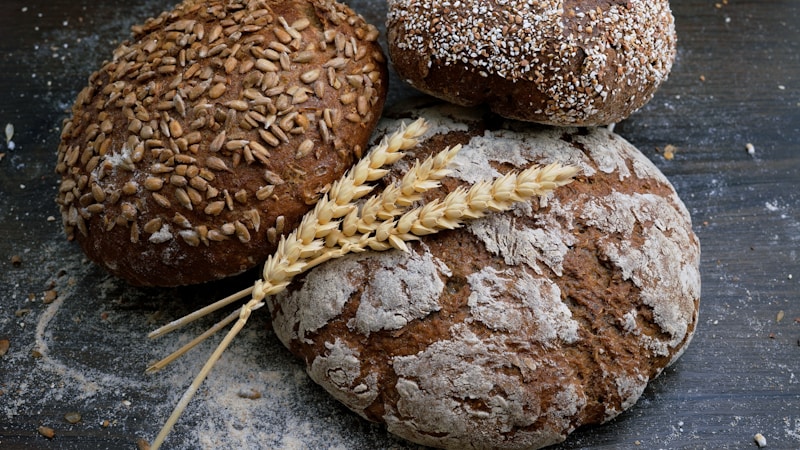
When you eat processed white bread, you're essentially eating pre-digested starch that hits your bloodstream almost as fast as pure sugar. Your body barely has to work to break it down. You spike, you crash, you're hungry again. When you eat true whole grain bread with intact fiber structures, the digestion is slowed, the blood sugar response is moderated, and you actually feel satisfied.
If you want a specific recommendation, I'm a fan of Dave's Killer Bread. Their 21 Whole Grains and Seeds variety has 5g of fiber and 5g of protein per slice. You can see the seeds. You can taste the texture. It's actual food, not fluffy air pretending to be nutrition. Most grocery stores carry it now, and the difference is night and day compared to standard "wheat" bread.
The Pattern Recognition Game
Here's what I want you to take away from this: the food industry has become incredibly skilled at making processed foods look healthy. Health halos are everywhere. "Natural," "wholesome," "made with real fruit," "good source of fiber." These phrases mean almost nothing legally and are designed to make you feel good about buying convenience products.
The real foods don't need marketing. Steel cut oats don't have cartoon characters on the box. Plain Greek yogurt doesn't come in birthday cake flavor. Whole grain bread doesn't need to convince you it's healthy because you can see the intact grains with your own eyes.
"If a food needs to convince you it's healthy, it probably isn't. Real food doesn't need a marketing budget."
The Practical Application
I know what you're thinking: "But I don't have 30 minutes to cook oatmeal every morning." Fair point. Here are some practical solutions:
- Overnight oats: Soak steel cut oats the night before. In the morning, they cook in about 10 minutes. Better texture, same convenience.
- Batch cooking: Make a big pot of steel cut oats on Sunday. Portion it out. Reheat throughout the week. Add some water or milk when reheating to restore texture.
- Yogurt prep: Buy plain Greek yogurt in large containers. Portion into smaller containers with your own fruit. Cheaper and healthier than individual cups.
- Bread education: Learn to read labels. "100% whole wheat" or "100% whole grain" on the front. Whole grain flour as the first ingredient. At least 3g fiber per slice. These are your criteria.
Fill the Gaps in Your Nutrition
Even with perfect food choices, getting optimal nutrition can be challenging. I recommend Opti-Greens 50 to cover your micronutrient bases, and a high-quality Level-1 protein powder for convenient protein supplementation when whole food isn't practical.
The Bottom Line
Your basic grocery choices matter more than most "advanced" nutrition strategies. You can optimize your meal timing, calculate your macros to the gram, and buy every supplement on the market. But if your oatmeal is processed garbage, your yogurt is candy in disguise, and your bread is glorified white flour, you're building on a cracked foundation.
The good news? These fixes are simple. Often cheaper, actually. A canister of steel cut oats costs less per serving than those fancy instant packets. Plain yogurt is cheaper than the flavored cups. Real whole grain bread isn't significantly more expensive than the fake stuff.
You just have to know what to look for. And now you do.
Stop sabotaging your gains with choices that seem healthy but aren't. Read the labels. Count the fiber. Check the sugar. Buy the boring stuff and make it taste good yourself. Your body will thank you with better energy, better recovery, and better results.
Want Personalized Nutrition Guidance?
Navigating the grocery store is just the beginning. If you're ready to build a complete nutrition strategy tailored to your goals, body, and lifestyle, let's talk. I offer free nutritional consultations to help you cut through the confusion and build sustainable eating habits.
References
- Åberg, S., et al. (2015). Intact and disrupted cereal grains: Effects on postprandial metabolism. Nutrients, 7(9), 7498-7507.
- Ahmad, A., et al. (2008). Effects of natural honey consumption in diabetic patients. Journal of Medicinal Food, 11(1), 100-107.
- Douglas, S. M., et al. (2013). Low, moderate, or high protein yogurt snacks on appetite control. Appetite, 60, 117-122.
- Granfeldt, Y., et al. (2000). Glucose and insulin responses to barley products. Journal of the American College of Nutrition, 19(5), 635-644.
- Reynolds, A., et al. (2019). Carbohydrate quality and human health. The Lancet, 393(10170), 434-445.
- Saarinen, K., et al. (2011). Birch pollen honey for birch pollen allergy. International Archives of Allergy and Immunology, 155(2), 160-166.
- Sonnenburg, J. L., & Bäckhed, F. (2016). Diet-microbiota interactions. Nature, 535, 56-64.
- Whitehead, A., et al. (2014). Cholesterol-lowering effects of oat β-glucan. American Journal of Clinical Nutrition, 100(6), 1413-1421.