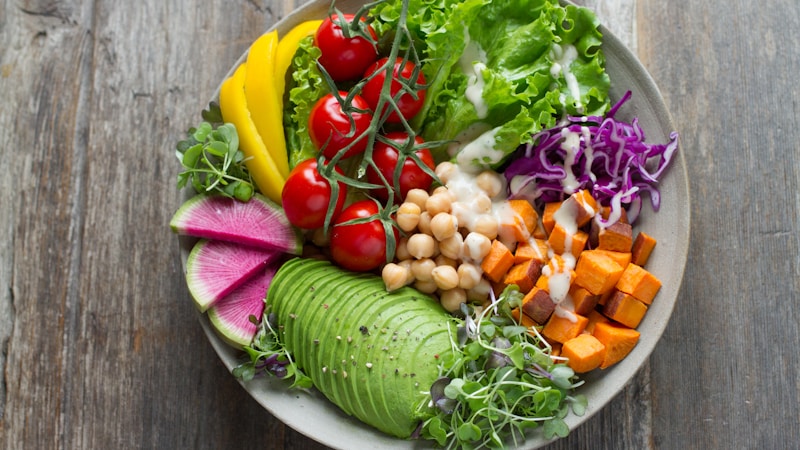
Your grandmother knew turmeric fought inflammation before Stanford did. She just called it soup.
Somewhere between the microwave dinner and the $18 smoothie bowl, we forgot that food was the original medicine. Every herb on your spice rack is a chemistry set. Every vegetable in your fridge is a pharmacy. The problem isn't that healing food is expensive or complicated. It's that we've been sold the idea that healing food is a subscription service.
This post is the antidote. One Sunday afternoon of prep. Five recipes from a single batch of sauces. Four to six meals a day, all under 500 calories, built from ingredients you can buy for less than the cost of a week of takeout. Proteins purchased monthly in bulk. Produce refreshed weekly. Spices that work harder than most of your supplements.
We're building a kitchen apothecary. Not a diet. A system. One that targets inflammation, blood sugar, gut health, and brain fog at the same time, without asking you to cook every night or eat things that taste like punishment.
Every jar on the spice shelf is a bioactive compound. You don't need a supplement aisle when you have a spice cabinet.
A Brief, Slightly Ancient History of Eating to Heal
The idea that food is medicine isn't new. It's just buried under a century of marketing.
Herbalism: The Oldest Science
Before there were pharmacies, there were gardens. Egyptian medical papyri from 1500 BCE documented hundreds of medicinal plants. Ayurvedic texts from the same era laid out turmeric, ginger, and black pepper as digestive and anti-inflammatory agents. Traditional Chinese Medicine catalogued thousands of herb and food combinations, many of which we're now validating with randomized controlled trials.
What modern science calls "bioactive compounds," ancient herbalists called "properties." They didn't know the name curcumin, but they knew turmeric calmed joints. They didn't know allicin, but they knew garlic fought off infections. They didn't know sulforaphane, but they knew cruciferous vegetables were the foods you ate when you were sick.
Botany: The Why Behind the What
Plants don't make these compounds to heal you. They make them to survive. Turmeric's curcumin is an antifungal the plant produces to protect its rhizomes. Broccoli's sulforaphane is a defense against insect predators. Cinnamon's cinnamaldehyde is antimicrobial armor against mold.
When you eat the plant, you inherit the chemistry. Your liver recognizes most of these compounds and uses them to upregulate your own detoxification and anti-inflammatory pathways. It's one of the weirdest hand-me-down systems in biology: a plant's defense mechanism becomes your defense mechanism, just by chewing it.

Alchemy: The Art of the Combination
Here's where it gets interesting. The old alchemists were obsessed with combinations, not single ingredients. They understood something modern nutrition is only catching up on: bioavailability. The whole is often greater than the sum of its parts, and sometimes the parts don't work at all without the right partner.
Curcumin absorption increases by 2,000% when paired with piperine from black pepper. Iron from spinach absorbs better with vitamin C from citrus. The fat-soluble vitamins (A, D, E, K) need fat to even enter your bloodstream. Eating a raw carrot salad with no dressing is almost pointless for beta-carotene absorption.
Ancient cooks paired these things intuitively. Indian cuisine always cooks turmeric with pepper and fat. Mediterranean cuisine always pairs tomatoes (lycopene) with olive oil. Japanese miso always comes with seaweed. These aren't flavor accidents. They're pharmacology.
"Let food be thy medicine and medicine be thy food." Hippocrates said it in 400 BCE. Your multivitamin said it last week and charged you for the privilege.
That's the system we're building. Not single ingredients. Combinations that multiply each other. Pairings that turn a $2 head of broccoli into something your liver thanks you for.
Ingredients: Why the Shelf Matters More Than the Recipe
Recipes are overrated. Ingredients are everything. Give an average cook premium ingredients and they'll make something decent. Give a great cook cheap ingredients and they'll still struggle. Build your kitchen apothecary around the compounds that do the work, and the recipes become easy.
The Herb and Spice Anchor List
These are the heavy lifters. Keep them in rotation. Buy in bulk. Replace every six months because volatile oils degrade.
| Spice / Herb | Active Compound | What It Does |
|---|---|---|
| Turmeric | Curcumin | Lowers CRP and inflammatory cytokines, targets joint and gut inflammation |
| Black pepper | Piperine | Boosts nutrient absorption, especially curcumin |
| Ginger | Gingerol | Digestive aid, anti-nausea, modulates blood sugar |
| Garlic | Allicin | Antimicrobial, cardiovascular support, modest blood pressure reduction |
| Cinnamon (Ceylon) | Cinnamaldehyde | Improves insulin sensitivity, blunts post-meal glucose spikes |
| Oregano | Carvacrol | Antimicrobial, antifungal, gut pathogen suppression |
| Rosemary | Carnosic acid | Neuroprotective, supports memory and cognitive function |
| Thyme | Thymol | Respiratory support, antibacterial |
| Cumin | Cuminaldehyde | Iron bioavailability, digestive enzyme stimulation |
| Cayenne | Capsaicin | Metabolic rate boost, appetite suppression, circulation |
Ten ingredients. Under $40 total if you buy at a Mediterranean or Indian grocery. They cover most of the territory that a $200 supplement stack claims to cover, and with better bioavailability because they arrive in food, with fat, and with their natural cofactors intact. If supplements are still your thing, the building a sustainable supplement stack guide covers how to layer them without duplicating what's already in your spice rack.
The Five-Spice Rule
Every meal you make should contain at least five distinct herbs or spices. Not to taste fancy. To stack bioactive effects. One spice is flavor. Five is pharmacology.
The Vegetable Foundation
Color matters. Each pigment family represents a different class of compounds. A beige plate is a wasted plate.
- Deep greens (kale, spinach, broccoli, arugula, watercress) deliver lutein, sulforaphane, folate, and fiber
- Reds (tomato, red pepper, beet) bring lycopene, betalains, and anthocyanins
- Oranges and yellows (carrot, sweet potato, squash, turmeric) supply beta-carotene and curcumin
- Purples and blues (eggplant, cabbage, blueberry) deliver anthocyanins and resveratrol precursors
- Whites (garlic, onion, cauliflower, leek) provide allicin, quercetin, and indole-3-carbinol
Four colors per meal is the target. You'll hit most of the polyphenol and carotenoid families without trying. The fermented foods obesity and blood sugar article covers the gut-health side of this: adding fermented versions (sauerkraut, kimchi, kefir) of these same vegetables to hit the microbiome directly.

The Fruit Rotation
Fruits are flavor carriers and fiber delivery systems. Pick three or four at a time, eat them for a week, rotate. Frozen is fine (often better for antioxidant retention). Avoid juicing outside of occasional use. You want the whole fruit for the fiber matrix that slows glucose absorption, which is the whole point per the GLP-1 natural satiety guide.
The high-polyphenol rotation: blueberries, blackberries, pomegranate, tart cherry, red grapes, apples (with skin), citrus, kiwi, papaya. Pick three. The specific fruit matters less than making sure you're rotating through different polyphenol profiles.
Batch Prep: Sauces, Marinades, and Seasonings
This is the step that makes the whole system work. If you try to season and sauce every meal from scratch, you'll quit by Wednesday. If you batch-prep once on Sunday, you'll coast through the week.
Three Master Sauces Cover Five Recipes
Here's the trick: one sauce, slightly modified, works across multiple meals. Batch one big jar of each. Store in the fridge for seven days, or freeze portions for month-two.
Sauce 1: The Golden Base (anti-inflammatory, goes with fish, chicken, roasted vegetables, legumes)
11 cup olive oil (extra virgin)
24 tbsp turmeric
32 tbsp black pepper (coarse)
43 tbsp grated fresh ginger
56 cloves minced garlic
62 tbsp cumin
71 tbsp cinnamon (Ceylon)
8Juice of 2 lemons
9Salt to taste
Warm the oil gently. Bloom the spices in it for 3 minutes. Cool. Blend with lemon juice and salt. Yields about 2 cups. Uses: marinade for chicken, drizzle over roasted vegetables, dressing for grain bowls, base for lentil soup, glaze for salmon.
Sauce 2: The Green Herb Bomb (brain and gut, goes with grains, eggs, yogurt, grilled anything)
12 cups parsley
21 cup cilantro
31 cup basil
41/2 cup mint
56 cloves garlic
61 cup olive oil
71/4 cup pine nuts or walnuts
8Juice of 2 lemons
9Zest of 1 lemon
10Sea salt
Blend everything. Yields about 2 cups. Uses: pesto for pasta or grain bowls, topping for eggs, marinade for shrimp, dollop on roasted vegetables, swirl into yogurt for a dip.
Sauce 3: The Smoky Red (cardiovascular, goes with beef, beans, eggs, potatoes)
12 roasted red peppers
24 tomatoes (or 1 can whole)
31 tbsp smoked paprika
41 tsp cayenne
56 cloves garlic
61 tbsp oregano
71/2 cup olive oil
82 tbsp red wine vinegar
9Salt
Blend and simmer 20 minutes to reduce. Yields about 3 cups. Uses: shakshuka base, pasta sauce, dip for vegetables, glaze for beef, soup starter.
Three sauces. Ninety minutes of work on a Sunday. Fifteen to twenty meals worth of flavor and bioactive load.
Dry Seasoning Blends (The One-Jar Fix)
Keep two dry blends pre-mixed in jars. When you're tired, you just shake and go.
Blend A: Warming Savory (for meat, lentils, soups)
- 3 tbsp cumin
- 2 tbsp smoked paprika
- 2 tbsp coriander
- 1 tbsp turmeric
- 1 tbsp black pepper
- 2 tsp cinnamon
- 1 tsp cayenne
- 2 tsp sea salt
Blend B: Herbaceous Bright (for fish, chicken, eggs, vegetables)
- 3 tbsp dried oregano
- 2 tbsp dried thyme
- 2 tbsp dried rosemary
- 2 tbsp garlic powder
- 1 tbsp onion powder
- 1 tbsp lemon zest (dried)
- 2 tsp black pepper
- 2 tsp sea salt
These blends live in the pantry for months. A tablespoon of either transforms a bland protein or vegetable into something with real chemistry behind it.
The Fat Rule
Most of turmeric, rosemary, paprika, and black pepper's active compounds are fat-soluble. Always cook these spices in oil, butter, or ghee. Sprinkling dry turmeric on steamed vegetables is a waste of both the turmeric and your time.
Batch-Cooked Sides: The Carb Half of the Plate
Carbs aren't the enemy. The wrong carbs are. Refined, stripped, snack-food carbs spike your glucose and leave you hungry an hour later. Whole, fiber-loaded, slow-cooked carbs keep you full, feed your gut bacteria, and stabilize your energy. The carbs, hormones, and nutrition truth article goes deeper on the hormonal side. For the meal plan, keep it simple: pick two or three of these, cook a big pot each weekend.
The Rotating Carb Base (Batch of 4-6 Cups Each)
Brown or wild rice: Cook 3 cups dry with a cinnamon stick, a bay leaf, and a tablespoon of turmeric. Fluff with a fork. Refrigerates 5 days, freezes great. Pair with: Golden Base sauce, any protein, roasted vegetables.
Quinoa: Cook 2 cups dry in vegetable or chicken broth. Add a teaspoon of cumin and zest of one lemon. Pair with: Green Herb Bomb, lentils, grilled chicken.
Lentils (green or black): Cook 2 cups with garlic, bay leaf, and a splash of vinegar (keeps them from going mushy). Pair with: Smoky Red sauce, feta, spinach.
Sweet potato: Cube 4-5 medium sweet potatoes. Toss with olive oil, Blend A (Warming Savory), and roast at 425F for 30 minutes. Pair with: almost everything.
Chickpeas (canned or dry-cooked): Rinse, pat dry, toss with olive oil and Blend A, roast at 400F for 25 minutes for crispy. Or leave soft for stews and bowls.
Farro or barley: If you tolerate gluten, these are the heavyweights of gut-fiber. Cook in broth with rosemary. Pair with: Smoky Red, mushrooms, roasted squash.
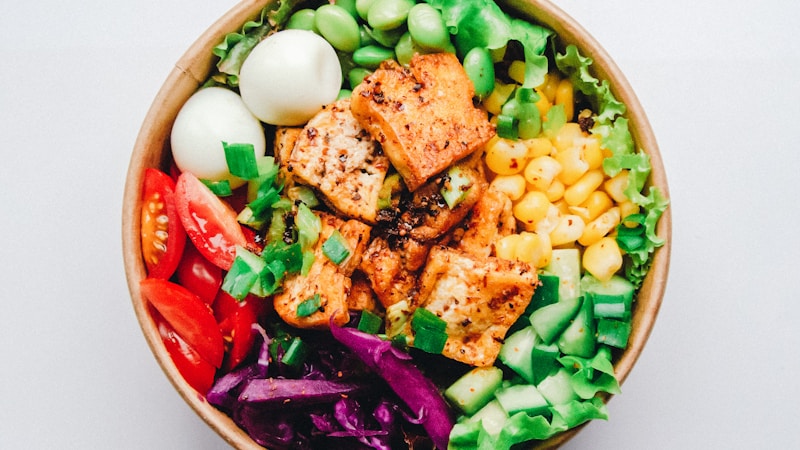
Pick two carbs per week. That's enough variety. Cook in big batches on Sunday. They'll survive the week in glass containers.
The Vegetable Side Batch
Same principle, different ingredients. Batch-roast once. Use everywhere.
Sheet-pan roast (one tray, 40 minutes, 425F):
- 1 head broccoli, cut into florets
- 1 head cauliflower, cut into florets
- 2 red bell peppers, sliced
- 1 red onion, wedged
- 1 zucchini, thick-sliced
- Toss with olive oil, salt, and Blend B (Herbaceous Bright)
Yields about 8 cups of roasted vegetables. Lives in the fridge for 5 days. Goes into grain bowls, wraps, omelets, pasta, or just reheated with a drizzle of sauce.
Massaged kale or spinach: 2 bunches of kale, destemmed, chopped, massaged with olive oil, lemon juice, and salt. Keeps 4 days in the fridge and gets better as it sits. Perfect base for any grain bowl.
Batch-Prepared Fruit: The Lazy Person's Dessert
Fruit is already fast food. But a little prep makes it the easiest meal add-on of the week.
The Weekly Fruit Prep
Berry wash and dry: Wash blueberries, blackberries, raspberries in a water-vinegar solution (3 parts water, 1 part vinegar for 60 seconds). Rinse. Dry thoroughly on a towel. Store in a paper-towel-lined glass container. They'll last 10 to 14 days instead of 3. Pair with yogurt, oatmeal, or eat straight.
Apples and citrus: These don't need prep. They're the grab-and-go crew. Keep them visible on the counter.
Chia-seed fruit jam: 2 cups frozen berries, 2 tablespoons chia seeds, 1 tablespoon honey, juice of half a lemon. Simmer 10 minutes. Chia seeds thicken it like pectin. Keeps 10 days in a jar. Spread on toast with Greek yogurt for a 300-calorie breakfast.
Frozen banana slices: Slice 4 ripe bananas, freeze on a tray, transfer to a bag. Blend with cocoa and almond butter for instant "ice cream" dessert around 250 calories. Or throw into smoothies.
Stewed cinnamon apples: 4 apples, peeled and diced, simmered with 2 teaspoons Ceylon cinnamon, a splash of lemon juice, and a tablespoon of water for 15 minutes. Keeps 7 days. Eat with Greek yogurt for breakfast or with roasted pork for dinner.
Matching Proteins to Your Dishes
Here's where the system gets economical. Buy your proteins monthly, in bulk, during sales. Freeze in meal-sized portions. Match them thematically to your sauces.
The Four-Protein Rotation
Chicken thighs (boneless, skinless): Buy a 5-pound family pack. Portion into 1-pound bags. Freeze. Works with: Golden Base sauce (Moroccan-style), Green Herb Bomb (Italian herb), Blend A dry rub (smoky). Cook: pan sear, slow cook, or sheet pan.
Wild salmon or sardines: Salmon is premium. Sardines are the underrated king. Both deliver omega-3s that fight inflammation and feed your brain. Pair with: Golden Base sauce (turmeric salmon), Green Herb Bomb (herbed sardines on toast). Canned sardines cost $2, last years, and beat most supplements on omega-3 content per dollar.
Grass-fed ground beef or lamb: Buy 3-pound tubes on sale. Portion into 1-pound bags. Freeze. Pair with: Smoky Red sauce (meatballs), Blend A (spiced lamb bowls). Grass-fed matters for the omega-3 to omega-6 ratio.
Plant proteins: Lentils (covered above), chickpeas (covered above), plus firm tofu or tempeh for variety. Tempeh takes Green Herb Bomb marinade beautifully.
The Monthly Shop Principle
One trip per month for proteins. Buy the sale. Portion. Freeze. A $150 protein shop covers 4 weeks of meals for one person, or 2 weeks for a family. Compared to $15-per-meal takeout, you're saving roughly $1,100 per month for a family of four eating one homemade meal a day.
The Portion Trick
When you get home from the protein shop, portion everything into 1-pound freezer bags before you put it away. Label with the date. This single habit is the difference between eating what you bought and watching it go bad. Ten minutes of work saves you from the "I'll figure out dinner later" trap all week.
Protein-to-Sauce Matching Chart
| Sauce | Chicken | Salmon / Fish | Beef / Lamb | Plant |
|---|---|---|---|---|
| Golden Base | Moroccan chicken bowl | Turmeric salmon | Spiced lamb skewers | Golden lentil stew |
| Green Herb Bomb | Herb chicken pasta | Herbed fish on toast | Herb-crusted meatballs | Herby tempeh |
| Smoky Red | Chicken shakshuka | Romesco-glazed fish | Italian meatballs | Red pepper chickpeas |
| Blend A (dry) | Cumin chicken rice | Smoky fish tacos | Spiced ground beef | Roasted chickpeas |
| Blend B (dry) | Herbed sheet-pan chicken | Lemon-herb fish | Herb-seared lamb | Herbed tofu |
That's 20 distinct meals from 3 sauces, 2 dry blends, and 4 proteins. Swap the carb and the vegetable base, and you're at 50+ meal combinations without repeating yourself.
Shopping Efficiently: Thematic, Rhythmic, Boring
The fastest way to sabotage a meal plan is to shop for it wrong. Long lists. Random trips. Impulse buys. Half the food rots.
The fix is rhythm, not willpower.
The Monthly Protein Shop
One trip. Warehouse store or sale-priced butcher. Buy in bulk. Portion and freeze the same day. This takes 90 minutes a month and is the single most budget-effective move in the entire system. Buy:
- 5 lbs chicken thighs
- 3 lbs ground beef or lamb
- 2 lbs salmon fillets (fresh or frozen, both fine)
- 12 cans wild sardines or mackerel
- 2 lbs firm tofu or tempeh (refrigerated, use within 10 days of opening)
- 18 eggs per week budget (so 72 eggs roughly, though you'll shop these weekly since they're cheap)
The Weekly Produce Shop
Thursday or Friday is ideal. You shop for the next 7 days. Produce doesn't keep longer than that anyway, and the weekend prep day is coming.
Consistent weekly list:
- 1 head kale or 1 large bag spinach
- 1 head broccoli
- 1 head cauliflower
- 2 red bell peppers
- 1 red onion + 1 yellow onion
- 1 zucchini or summer squash
- 1 large sweet potato or 3 medium
- 1 bunch parsley, 1 bunch cilantro, 1 bunch basil
- 1 lemon, 2 limes
- 1 head garlic (if you don't have pre-peeled jarred on hand)
- Fresh ginger knob
- 3 apples
- 2 cups berries (fresh or frozen)
- 2 tomatoes (or 1 can whole tomatoes for sauce prep)
That's it. Same list, give or take, every week. Boring is the feature. It eliminates decision fatigue, which is the silent killer of every meal plan ever attempted. The basic choices sabotaging gains article hits this point harder.
The Decision Fatigue Trap
Most failed diets fail not because the food was wrong, but because the shopper had to make 40 new decisions every week. Standardize the list. Automate the rhythm. Save your willpower for the things that actually matter.
The Pantry Stock (Every 2-3 Months)
- Extra virgin olive oil (buy the big bottle)
- Coconut oil or ghee for high-heat cooking
- Brown rice, quinoa, lentils, chickpeas (dry or canned)
- All 10 anchor spices and both dry blends
- Canned tomatoes, tomato paste, coconut milk
- Apple cider vinegar, red wine vinegar, tamari or soy sauce
- Raw honey, pure maple syrup
- Tahini, almond butter
Stock this once, top off quarterly. You'll rarely need a "pantry trip."
A well-stocked pantry is a meal plan's insurance policy. You should never be one ingredient away from giving up.
The 7-Day Meal Plan (4-6 Meals, Under 500 Calories Each)
Here's the plan in action. Assumes a 2,000-2,400 calorie daily target. Scale up or down based on your BMR calculation. Every meal uses batch-prepped components. Total cooking time during the week: under 15 minutes per meal.
Recipe Count Check
Same three sauces, two dry blends, four proteins, five carb bases, one sheet-pan vegetable mix. The following 5 recipes are the core. Everything else is variation.
Recipe 1: Golden Chicken & Quinoa Bowl (Golden Base + chicken + quinoa + sheet-pan veg + massaged kale). 470 calories.
Recipe 2: Herbed Salmon over Farro (Green Herb Bomb + salmon + farro + roasted veg + lemon). 490 calories.
Recipe 3: Shakshuka with Chickpeas (Smoky Red + eggs + chickpeas + kale + sourdough toast). 420 calories.
Recipe 4: Spiced Lamb & Sweet Potato (Blend A on lamb + roasted sweet potato + kale + tzatziki yogurt). 500 calories.
Recipe 5: Herbed Tempeh Grain Bowl (Blend B on tempeh + brown rice + sheet-pan veg + Green Herb Bomb drizzle). 450 calories.
The Day Plan (4 Meals at 500 cal + 2 Snacks at 200 cal = 2,400 cal)
| Time | Meal | Approx Calories |
|---|---|---|
| 7:00 AM | Greek yogurt + berries + chia jam + walnuts | 380 |
| 10:00 AM | 2 eggs scrambled with roasted vegetables + herb sauce | 320 |
| 1:00 PM | Recipe of the day (one of the 5 above) | 450-500 |
| 4:00 PM | Snack: apple + almond butter, or sardines on toast | 200 |
| 7:00 PM | Recipe of the day (different one) | 450-500 |
| 9:00 PM (optional) | Frozen banana "ice cream" with cocoa | 200 |
Rotate the lunch and dinner recipes across the week. Day 1: recipes 1 and 3. Day 2: recipes 2 and 4. Day 3: recipe 5 and leftovers from day 1. You'll hit all five within three days and repeat the rotation.
Supplements: Optional, Not Required
If you're hitting this meal plan 5 days a week, you may not need supplements at all. The spice shelf is already doing most of the work. But for specific goals (muscle, sleep, focus), the following are worth considering:
- Omega-3 if you're not eating fatty fish 3 times a week
- Vitamin D if you're north of the 35th parallel and don't get daily sun
- Magnesium glycinate before bed for sleep quality
- Creatine (5g daily) for strength and cognition
- Nootropics for focus and cognitive support, covered in depth in the nootropics complete guide
Supplements fill gaps. They don't replace the plate. The supplements for gut and cholesterol health article and the building a sustainable supplement stack guide cover the specifics without the hype.
Putting It All Together
Here's the honest truth most wellness content skips: eating well isn't a discipline problem or an education problem. It's a systems problem. You need:
- A shortlist of ingredients you trust
- A set of sauces and seasonings that multiply bioactive compounds
- A shopping rhythm that doesn't require thought
- A Sunday prep session that sets up the whole week
- A small menu of recipes you can rotate without boredom
Do that, and you bypass most of the diet-industry machinery. You feed your body what your grandmother would recognize as food. You pay 40% of what takeout costs. You eat compounds that have 4,000 years of clinical trials behind them. And you free up the mental energy that was going into "what's for dinner" to things that actually matter.
"The doctor of the future will give no medicine, but will interest his patients in the care of the human frame, in diet, and in the cause and prevention of disease." Thomas Edison, 1903. He was right. We just took the long way around.
The kitchen apothecary isn't a destination. It's a habit stack. Once it runs, it runs. The first two weeks feel slow because you're building the infrastructure. Week three forward, it's automatic. You start to notice things: inflammation drops, your stomach settles, your skin clears, your brain fog lifts. Nothing dramatic. Just small compounding wins, exactly how it's supposed to work.