

Here's the truth nobody in the corner office wants to say out loud: the smaller business has the advantage right now. Not the consolation prize. Not "plucky underdog energy." The actual structural advantage. You can change direction on a Tuesday afternoon. Your competitor with 4,000 employees needs a steering committee, a budget cycle, and a vendor review to change the font on a form.
And the businesses that use that agility will do more than survive. They'll grow into the next large organization, and when they do, they'll eat the bones of the competition that was too slow to move. I'm not being poetic. That's how markets have always worked. The only thing that's different this time is the tool, and the tool is finally good enough.
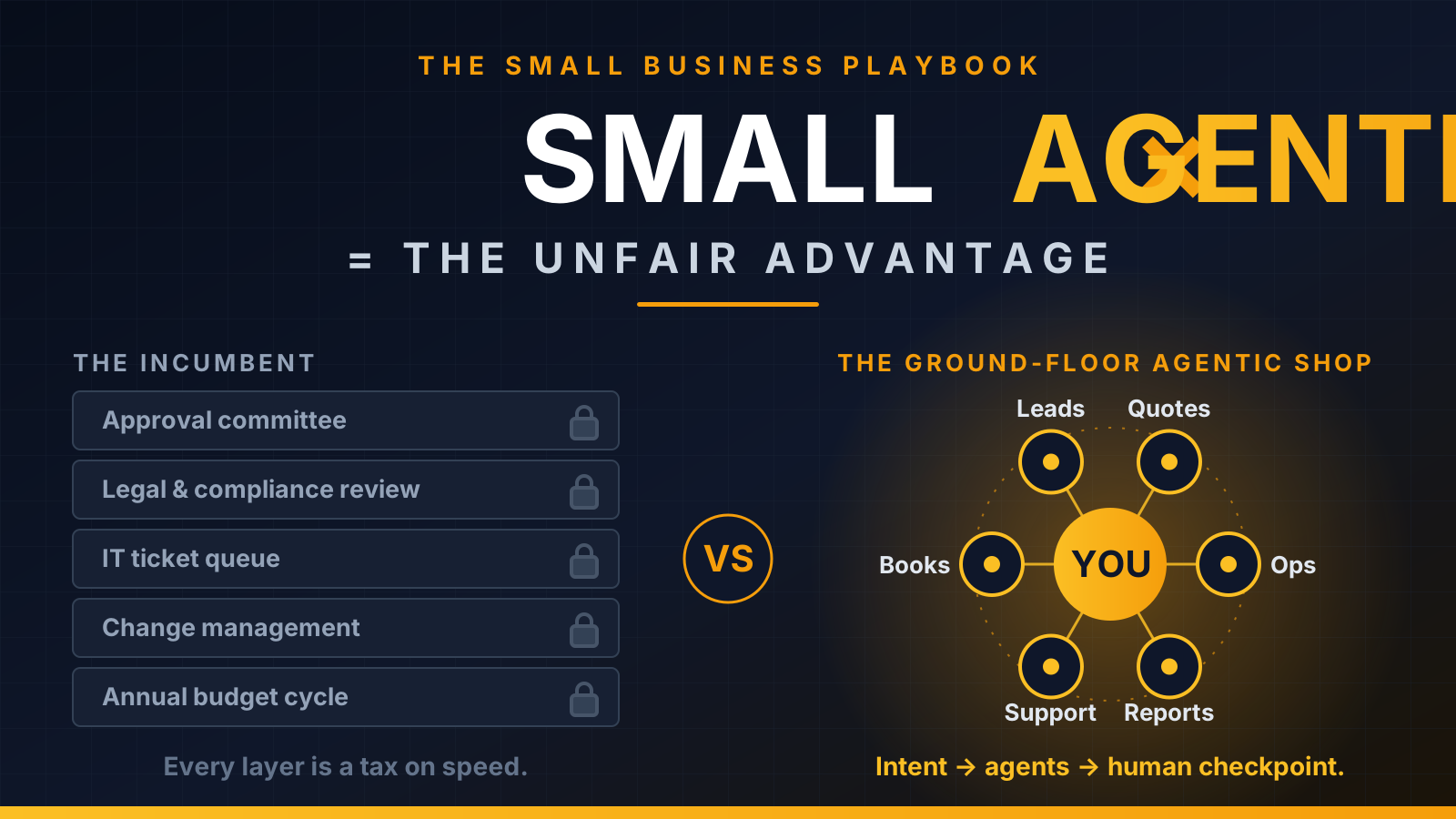
I'm making a specific claim here, so let me state it plainly. Structuring for agentic work at the ground floor of a smaller business is the move that lets you reduce overhead to the point where you can at least compete with larger players, and in plenty of cases beat them. Not "sprinkle some AI on it." Structure. Roles, workflows, and data organized so that agents can do the repeatable work and humans keep the judgment calls.
That strategy isn't a nice-to-have. In the year ahead, it's going to be part of how you keep the lights on. Let's build the case, then the plan.
The Lie We Were Sold About Scale
For about a century, "bigger" was a moat. Not because big companies were smarter, but because coordination was expensive. Getting a hundred people to do a coherent thing took managers, meetings, processes, and software, and all of that cost money that only scale could pay for. If you were small, you couldn't afford the machinery, so you lost to the one who could.
Meanwhile small business never stopped being the backbone. According to the SBA Office of Advocacy's 2025 profile, there are 36.2 million small businesses in the United States, accounting for almost half of private-sector employment, and they generated roughly nine out of every ten net new jobs between March 2023 and March 2024. The economy already runs on small shops. They've just been running with one hand tied behind their back.
Here's what changed. The expensive part of scale, the human coordination layer of triage, drafting, scheduling, follow-up, reconciliation, and reporting, is exactly the work agents are getting good at. When that work gets cheap, the advantage of having a big coordination machine shrinks. The advantage of being able to move fast without one grows.
That's the quiet inversion. The thing that made large companies hard to beat is turning into the thing that makes them hard to change.
Why Big Is Slow (It's Physics, Not Stupidity)
I've spent more than twenty years around technology leadership, and I want to be fair to big organizations: they aren't slow because the people are dumb. They're slow because of physics. Every person added to a decision adds communication paths. Every system added to the stack adds integration work. Every policy added to protect the company from one bad outcome adds friction to ten good ones.
Watch what happens when a large organization wants to adopt a new way of working. Somebody has to write the request. Security reviews it. Legal reviews it. Procurement negotiates it. IT schedules it. Training gets built. A rollout plan gets approved. Then people have to actually change their habits, which is the hardest part and the one that quietly kills most initiatives. By the time it's live, the tool has changed and so has the problem.
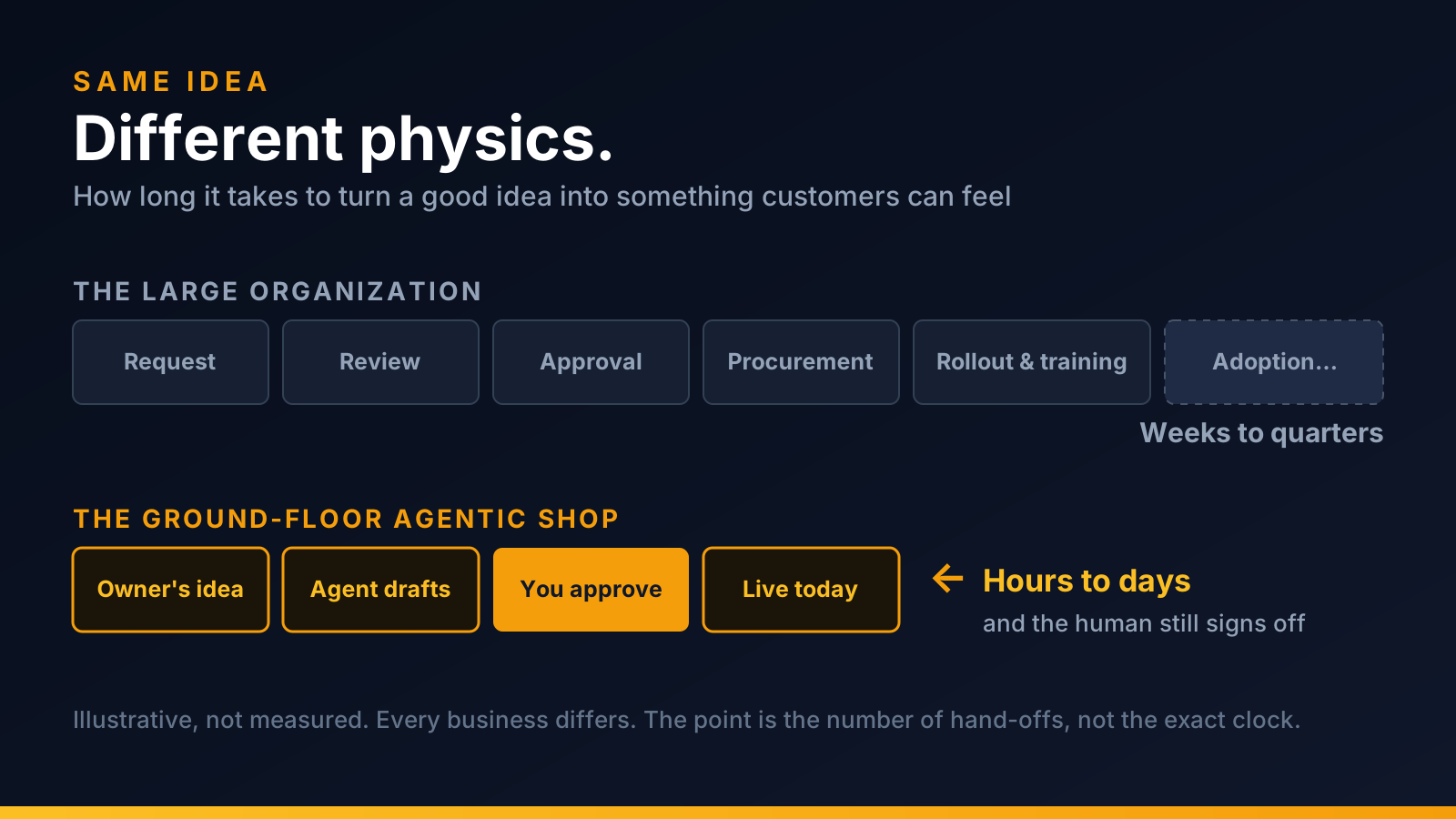
A six-person company doesn't have those layers. The owner who thinks of the idea can also approve it, try it that afternoon, and kill it on Friday if it's bad. That is a genuinely different speed of learning, and in a period where the tools are changing every quarter, learning speed is the whole game.
The Coordination Tax
Every layer between "someone notices a problem" and "someone fixes it" is a tax on speed. Large organizations pay that tax on everything. Small businesses can choose to pay almost none of it, but only if they don't rebuild the same layers out of habit as they grow.
There's an uncomfortable corollary. Plenty of small businesses are already running their own mini-bureaucracy: the owner is the approval committee, the ticket queue, and the budget cycle, all at once. If every email, quote, and invoice has to cross your desk, you didn't escape the coordination tax. You became it.
What "Agentic" Actually Means (No Hype)
"Agentic" is getting thrown around like confetti, so let me pin it down. A chatbot answers when you ask. An automation runs a fixed script when a trigger fires. An agent is given a goal, works through multiple steps, uses tools to get there (your inbox, your calendar, your CRM, your accounting software), makes small decisions along the way, and hands off to a human when it should.
That last part matters more than the rest. A good agent isn't a robot that replaces the person. It's a tireless junior teammate who does the first 80% of a repeatable task and knows when to tap you on the shoulder.
| Chatbot | Automation | Agent | |
|---|---|---|---|
| Starts when | You type a question | A trigger fires | A goal is assigned |
| Handles | One reply | One fixed script | Multi-step work with judgment calls |
| Breaks when | The question is vague | The situation changes | It lacks access, context, or guardrails |
| Best for | Answers, drafts | Predictable, identical tasks | Messy but repeatable workflows |
If you want the hands-on version of building one, I walked through it in Building Your First AI Agent, and the lighter-weight starting points are in 5 AI Automation Strategies Every Small Business Should Implement. This article is the layer above that: not which tool to use, but how to structure the business so the tools actually pay off.
That stat is the part most people read wrong. Adoption is racing up, which sounds like everyone has this handled. But one analysis of that same report found that most of the use is off-the-shelf tools dropped into workflows that didn't change at all. Typing questions into a chatbot is a perk. Rebuilding how the work flows so that agents handle the repeatable parts is a strategy. The gap between those two is where the advantage lives.
Structuring for Agentic From the Ground Floor
This is the heart of it, and it's the part I most want you to hear. The businesses that win here won't be the ones that bolt agents onto an existing mess. They'll be the ones that design the business so that agents have somewhere to plug in, starting early, while the business is small enough to shape cheaply.
Think of it as four layers, built from the bottom up.
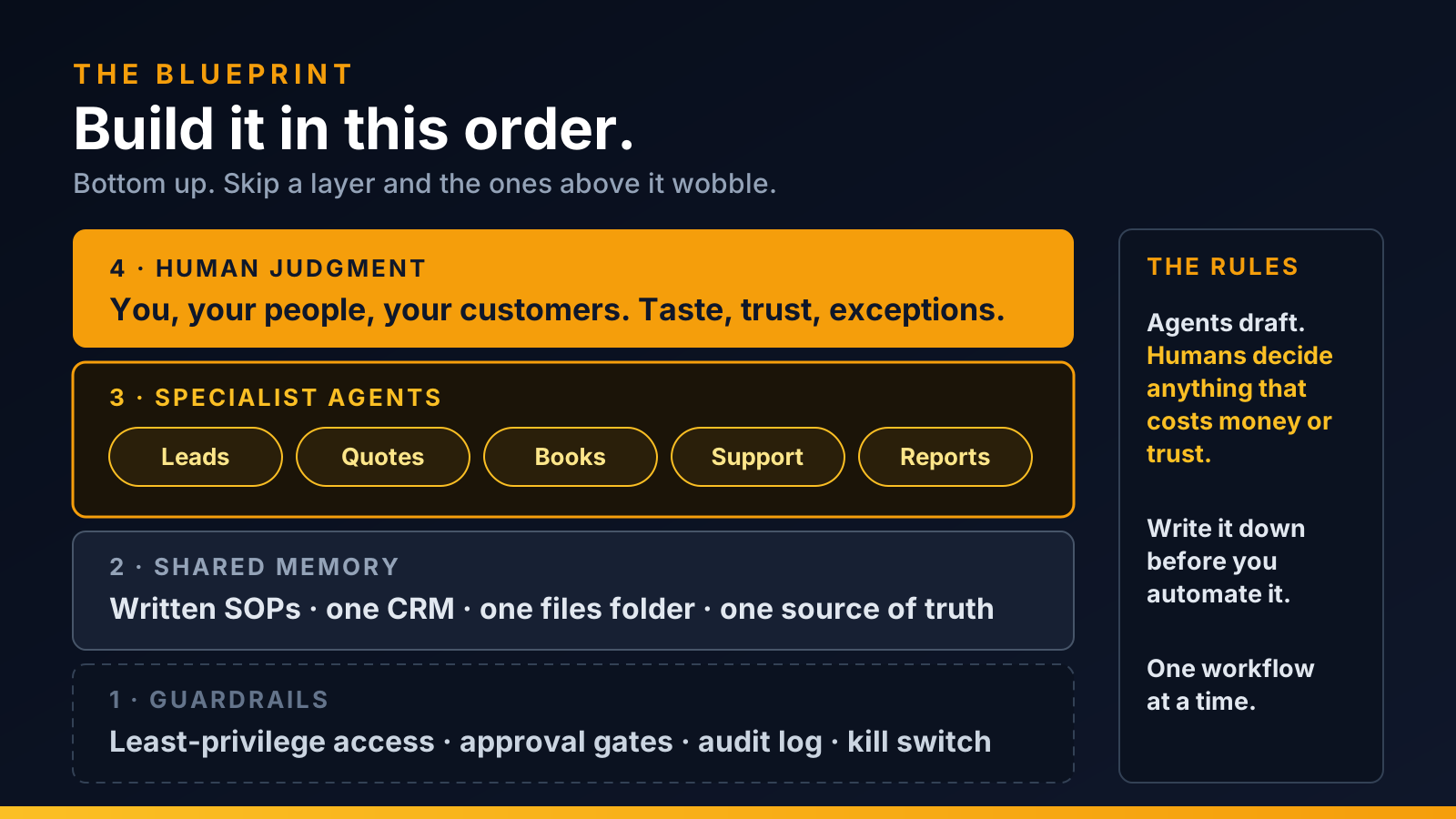
Layer 1: Guardrails. Before an agent touches anything, decide what it's allowed to touch. Least-privilege access, approval gates on anything that spends money or talks to customers, an audit log of what it did, and a kill switch. It's boring, and it's what separates a useful teammate from a liability. I covered the permissions side in more detail in AI at Work Without Handing It Your House Keys.
Layer 2: Shared memory. Agents are only as good as the context they can read. That means written SOPs (how you actually quote a job, onboard a client, handle a refund), one CRM, one folder structure, one source of truth. If the real process lives in your head and three different spreadsheets, the agent will confidently automate the wrong version.
Layer 3: Specialist agents. Not one giant do-everything bot. Small, focused ones: leads, quotes, bookkeeping, support, reporting. Narrow jobs, clear inputs, clear outputs. Narrow agents are easier to test, easier to trust, and far easier to fix when they screw up.
Layer 4: Human judgment. You, your people, your customers. Taste, relationships, exceptions, and the decisions that cost money or trust. The whole stack exists to protect your attention for this layer.
The Practical Test
Pick any task you did this week and ask: could a smart new hire do this correctly if I handed them a one-page written process? If yes, an agent probably can too. If no, the problem isn't the technology. The process only exists in your head, and writing it down is step one regardless.
Notice what's absent from that stack: a big budget. Writing SOPs, consolidating your data, and picking one workflow costs almost nothing but discipline. That's why the ground floor matters. A ten-person company with clean processes can restructure in weeks. A ten-thousand-person company with twenty years of accumulated exceptions needs a program office.
Where the Overhead Actually Hides
When people hear "reduce overhead," they think payroll. Payroll's part of it, but the bigger story is the invisible overhead: the hours that never show up as a line item because they're spread across everyone's week.
Here's where I'd look first in almost any small business:
- Lead response. The first business to answer an inquiry has a big edge, and a human who's busy with the actual work answers late. An agent answers in minutes, qualifies the lead, and books the call.
- Quoting and proposals. Gathering details, pulling prices, drafting the document, formatting it. An agent drafts it from your template and past jobs; you review and send.
- Scheduling and reminders. Back-and-forth on calendars is pure friction, and no-shows are pure lost revenue.
- Invoicing and collections. Chasing late payments politely and persistently is the kind of work people avoid and agents don't mind.
- Support triage. Most inbound questions are the same ten questions. Handle those instantly, route the weird ones to a person with the context already summarized.
- Reporting. The weekly "how are we doing" numbers that somebody assembles by hand on Sunday night.
Add that up and the shape of the opportunity becomes clear. A small shop doesn't need to match a giant's headcount to match its output per person on repeatable work. Every hour an agent absorbs is an hour you don't have to hire for, and an hour your best people spend on the work that actually differentiates you.
Watch Your Blast Radius
Don't hand an agent the keys to anything irreversible on day one. No unsupervised payments, no unreviewed customer-facing messages, no deleting data. Start with drafts and recommendations, let a human click "send," and widen the leash only as the track record earns it.
Competing With the Giants on Their Own Turf
Big companies have three things small ones traditionally couldn't match: round-the-clock coverage, polished responsiveness, and the ability to personalize at volume. All three used to require headcount. All three are now mostly a question of structure.
Picture a six-person home-services company. This is an illustrative scenario, not a client case study, but I'd bet it looks familiar. Today, inquiries that arrive after 5 p.m. sit until morning, by which time the customer has already called two competitors. Quotes take two days because the owner builds them at night. Invoices go out late and get chased even later. Everyone's "busy" and nobody's growing.
Now rebuild that same company from the ground floor. An intake agent answers after-hours inquiries in minutes, asks the qualifying questions, and drops a clean summary in the calendar. A quoting agent drafts the estimate from the intake notes and past jobs, and the owner reviews and sends it before lunch. A billing agent sends the invoice the moment the job closes and follows up on a schedule. The same six people, but the response time looks like a company ten times the size.
"Big companies have budgets. You have a calendar you control. Use it."
That's the real play. Not "do more with less" in the sad, burnout sense, but remove the waiting. Customers don't compare you to your size. They compare you to the last company that answered them fast. For the first time, a small shop can win that comparison on purpose.
The Bones of the Competition
Now the part where I get a little ruthless, because that's what the numbers on the other side of this look like.
Time saved isn't just savings. It compounds. The hours an agent frees get reinvested: better follow-up, faster delivery, more outreach, more experiments. The business that does this grows faster, which funds more restructuring, which frees more hours. Meanwhile the competitor who's still doing everything by hand watches response times slip, loses a few deals a month, then a few good people to somewhere with less drudgery, then a few margin points. None of it is dramatic. It's a slow bleed, and then one day it's a bone yard.
That's what I mean by eating the bones of the competition. The agile business picks up the customers a slower rival fumbled, hires the talent that rival burned out, and, if it's disciplined and has the capital, sometimes buys the rival outright. The businesses that change and grow become the next larger organization. That's not hype, that's just what the previous generation of fast-moving small companies did to the generation before them.
And "unity" is the word I keep coming back to, because it's what separates the businesses that scale from the ones that sprawl. Two kinds matter:
- Internal unity. One operating system. Your humans and your agents read from the same SOPs, the same data, and the same definition of "done." When the whole team, silicon and carbon, is pulling from one playbook, you can grow without fragmenting.
- External unity. Small businesses don't have to fight alone. Referral networks, shared tooling, buying groups, and fractional leadership let a handful of small players behave like one large one when it counts. If you want to see how a part-time executive layer fits that picture, I wrote about it in the fractional executive guide.
The trap, and I've watched it happen, is that the business grows and quietly rebuilds the bureaucracy it beat. New layers, new approvals, new "just in case" process. The ones that stay dangerous keep the structure that made them fast: narrow roles, written processes, agents on the repeatable work, humans on judgment. Growth isn't the enemy of agility. Unexamined habit is.
The Part Nobody Puts in the Pitch Deck
I'd be doing you a disservice if I only showed you the upside. This works, but it's not magic, and the failures are predictable.
Agents make mistakes, and they make them confidently. They'll misread a request, invent a detail, or follow a bad instruction buried in an email or web page. That's why Layer 1 exists, and why anything touching money, contracts, or customer trust gets a human checkpoint. If you want a sharper eye for the failure modes of machine-written content, Spotting AI Slop will train it.
Your data is now an attack surface. An agent with broad access to your inbox, files, and accounts is a very attractive target, and a very easy way to leak things by accident. Least privilege isn't a suggestion. Give each agent access to only what its job requires, log what it does, and know how to turn it off.
It won't fix a bad business. If your product is mediocre, your pricing is wrong, or your service is rude, a faster response just delivers the disappointment sooner. Agents amplify whatever you already are.
Over-automation costs you the relationship. Customers can tell when nobody's home. Automate the logistics, not the humanity. The moments that matter (the apology, the negotiation, the "I'll take care of it") stay with a person.
The Failure Pattern to Avoid
The classic mistake is buying five tools, wiring them to everything, and walking away. Six weeks later nobody trusts the output, the team routes around it, and "AI didn't work for us" becomes the story. The fix is the opposite: one workflow, a written process, a human checkpoint, and a measured result before you add the next.
Keeping the Lights On in the Year Ahead
Let me bring this home to the part that keeps owners up at night: survival. Roughly half of new employer businesses are gone within five years. That figure comes from BLS data, and it includes retirements and sales alongside outright failures, so don't read it as "half go bankrupt." But it tells you the margin for drift in this game is thin, and it's always been thin.
Now layer on what's happening around you. Your customers' expectations get reset by the fastest, easiest company they deal with anywhere, whether or not it's in your industry. Your competitors who restructure will carry lower overhead, which means they can price below you, respond faster than you, or both. And overhead is what actually ends businesses: fixed costs that keep running when revenue dips.
Here's the part I find genuinely exciting about the agentic structure. A lot of what used to be fixed overhead (a coordinator, an admin, a reporting analyst) becomes closer to variable cost. You pay for the work when there's work. When the business is lean and the slow season hits, that flexibility is the difference between tightening your belt and closing the doors. It isn't free, since the tools cost money and someone has to supervise them, so track the spend like any other line item. But the shape of the cost curve is friendlier for a small company than it's ever been.
So I'll say it the way I believe it: for a small business, building agentic structure in from the ground floor is no longer an experiment for the adventurous. It's becoming part of the basic cost of staying competitive, and in the year ahead, for a lot of shops, it's part of how you keep the lights on.
Your 30-Day Ground-Floor Plan
Enough theory. Here's the staircase. Four weeks, four steps, one workflow. Don't skip ahead.
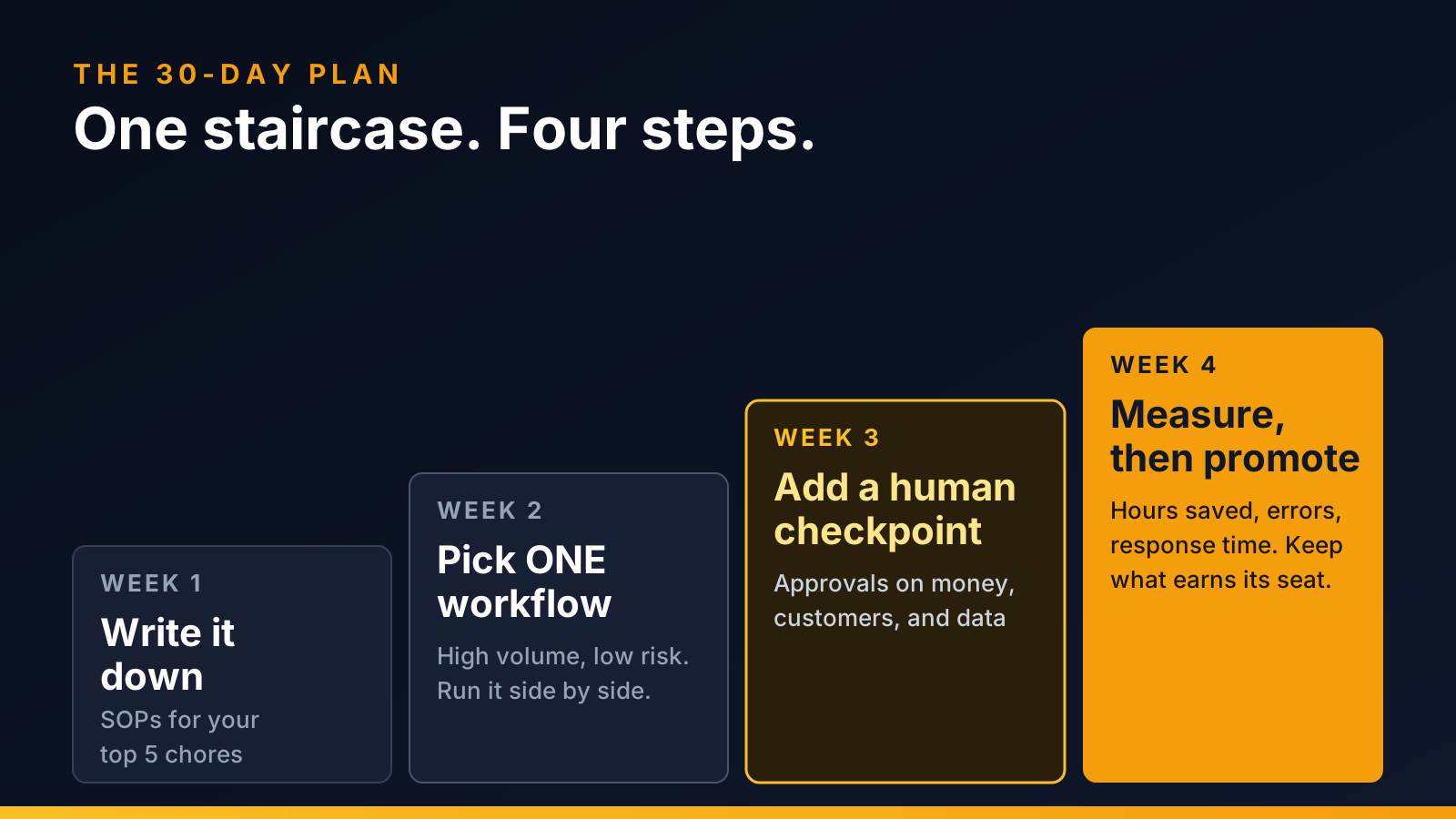
Week 1: Write it down. List the five chores that eat the most hours across your business. For each, write a one-page process: what triggers it, the steps, what "done" looks like, and where the exceptions are. You'll be surprised how much of it lives only in your head. This step alone is worth doing even if you never touch an agent.
Week 2: Pick ONE workflow. Choose the one with high volume and low risk. After-hours lead intake, appointment reminders, and weekly reporting are classics. Set it up and run it side by side with the human process, so you can compare results without risking a customer.
Week 3: Add the human checkpoint. Decide exactly where a person approves: anything that spends money, anything customer-facing the agent hasn't earned trust on, anything touching sensitive data. Set least-privilege access and turn on logging. Know where the off switch is.
Week 4: Measure, then promote. Look at hours saved, errors caught, and response time. Keep what earns its seat, fix or kill what doesn't, and only then pick the next workflow. Repeat the staircase. That's the whole engine.
Why This Works
You're not betting the business on a technology. You're running a series of small, reversible, measured experiments inside a structure designed to contain the downside. That's the same advantage small companies have always had, applied to a new set of tools.
The window where small is an advantage doesn't stay open forever. The incumbents will figure this out eventually, slowly, through the committees and the budget cycles and the change-management plans. You don't have any of those. That's the whole point. Build it into the foundation now, while the business is small enough to shape, and let the speed compound.
I'm not going to pretend it's effortless, and I'm not going to pretend it's optional. If you want a second set of eyes on where agents fit in your operation, that's exactly the kind of work I do with growing companies. Learn more about Greek-Fire Services →
Sources: SBA Office of Advocacy (2025 small business profile), U.S. Chamber of Commerce (Empowering Small Business, 2025), BLS Business Employment Dynamics (establishment survival, as tabulated by SBA Office of Advocacy).


