

Okay, sit down.
I'm going to explain how the entire global oil economy works using vocabulary a two-year-old can follow. Not because you're dumb. Because the people who normally explain this to you are either trying to make you angry or trying to sell you something. And the world would make so much more sense if we just stopped doing both of those things and explained it plainly.
Here's the thing about complex systems: they're not actually that complex. They're just explained badly. On purpose, usually. Because confused people are easier to scare, and scared people are easier to control. So instead of screaming about oil prices on cable news, let's draw it with crayons and be done in sixteen minutes.
We're going to use some playground vocabulary. Oil is magic juice (because without it, cars stop, lights go out, food doesn't move, and modern civilization dies). Dollars are American coins (because that's what they are). The global economy is a sandbox (because grown-ups act like toddlers in it). And we're going to follow the juice, the coins, and the game until the whole thing makes sense.
Ready? Buckle up. Or don't. You're two.
Why Magic Juice Costs More Right Now
First: why is gas more expensive at the pump? Is it corporate greed? Is it the president's fault? Is it that one political party you hate?
No. It's geography.
There's a tiny ocean door called the Strait of Hormuz. It sits between Iran and Oman, and it's about 21 miles wide at the narrowest point. Every single day, approximately 21 million barrels of oil pass through that door. That's roughly 20% of the world's entire oil supply squeezing through a gap you could see across on a clear day.
When there's trouble in the Middle East (and there's been a lot of trouble lately; I covered why in the Iran article), boats carrying juice slow down or stop. Insurance rates for tankers spike. Some routes get rerouted around Africa, adding weeks. The result: less juice flowing around the world.
Less juice + same demand = price goes up. This is not a conspiracy. It's supply and demand. It's the first thing they teach in economics, and it's the last thing anyone mentions on the news because "supply disruption through a narrow maritime chokepoint" doesn't make for good rage-clicking.
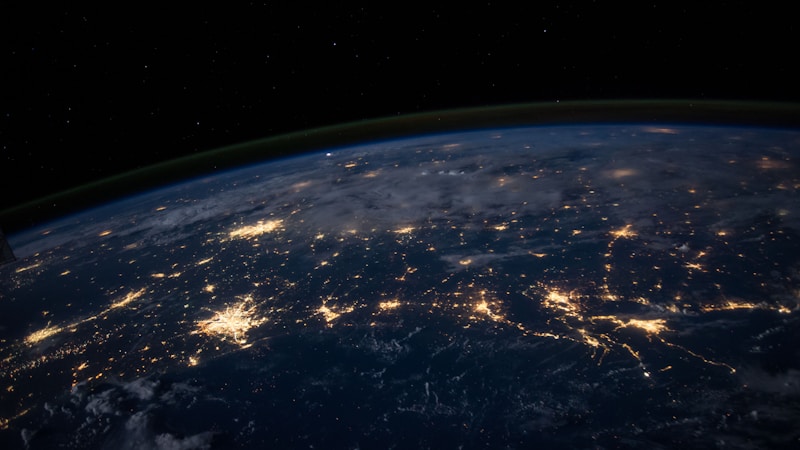
The global market consumes about 100 million barrels per day. When you lose even 5% of that to a chokepoint disruption, prices don't go up 5%. They spike. Commodity markets price in fear, uncertainty, and future scarcity. A 5% supply disruption can cause a 20 to 30% price jump because traders are pricing in "what if it gets worse?"
Your gas went up a dollar. The reason is a narrow strait 7,000 miles away.
Now let's talk about why that's actually not the bad news everyone thinks it is.
The Petrodollar Circle Game
Here's where it gets interesting. And by "interesting" I mean "this is the single most important economic mechanism on Earth and nobody teaches it in school."
In 1974, President Nixon struck a deal with Saudi Arabia. The deal was simple: all oil, everywhere in the world, would be priced and sold in US dollars. In exchange, the United States would provide military protection for Saudi Arabia and its oil infrastructure. Every major oil-exporting nation followed suit.
This created the petrodollar system. And it goes like this:
The Circle Game (6 Steps)
Step 1: Oil-exporting countries sell oil. Price goes up → they accumulate mountains of US dollars. (These are called "petrodollars": fancy name for "oil money denominated in dollars.") Step 2: Every country that BUYS oil needs US dollars first. They convert their own currency to buy dollars. → Demand for dollars goes up. → Dollar gets stronger. Step 3: The oil sellers don't just sit on the cash. They "recycle" it by buying US Treasury bonds (America's IOUs: "We'll pay you back later with interest"). Step 4: This flood of money into Treasuries keeps US interest rates low. America can borrow cheaply to finance its $36 trillion national debt. Step 5: America uses cheap borrowing to fund military, infrastructure, and economic growth. Step 6: That military protects global oil trade routes (including the Strait of Hormuz). → Circle continues.
This is why the US keeps its biggest, scariest toys parked right next to the tiny ocean door. Aircraft carriers in the Persian Gulf. Military bases dotting the sand. America isn't protecting oil. America is protecting the rule that says oil costs American coins. Break that rule and the circle game stops. Nobody breaks the rule because nobody wants the circle game to stop. Their cars need juice. The juice costs American coins. End of negotiation.
Currency Correction: The Math They Don't Show You
Okay. Here's the part that turns confused people into informed people. This is the section the news networks will never air because it doesn't make anyone angry enough to stay tuned through the commercial break.
What's happening right now is not a crisis. It's a rebalancing.
The world's currencies are being recalibrated through the petrodollar mechanism, and the short-term cost is higher gas prices. The long-term benefit is a stable dollar, manageable debt, and controlled inflation. Let me show you the math.
The Trade-Off Nobody Explains
Higher gas prices right now cost the average American household roughly $50 to $80 extra per month. That's real money. That's groceries. That's a utility bill. Nobody's pretending it doesn't hurt.
But here's what the ALTERNATIVE looks like without currency correction:
A 30% loss in purchasing power over 5 years. That means everything you buy, not just gas, costs 30% more. Your salary buys 30% less. Your savings lose 30% of their value. For a median household earning $75,000, that's roughly $22,500 in purchasing power lost over 5 years. Not $50 a month. Twenty-two thousand dollars.
Would you rather pay $4.50 per gallon for gas for 6 months, or watch your dollar buy 30% less of everything for the next decade? That's the actual choice. And the petrodollar system makes that choice for you, automatically, without asking.
How the Mechanism Works (With Real Numbers)
When oil prices rise:
- Global dollar demand increases → everyone needs more dollars to buy oil
- Dollar Index (DXY) strengthens → your dollar buys more of other currencies
- Stronger dollar → cheaper imports → controls inflation on everything you buy from overseas
- Petrodollar recycling → Gulf states buy Treasuries → keeps US borrowing costs low
- Low Treasury yields → US can service $36T debt without interest payments spiraling out of control
Without this system, US debt-to-GDP ratio at 120% would be a sovereign debt crisis. With this system, it's manageable. The difference is the petrodollar circle feeding cheap money back into the piggy bank.
In sandbox terms: when juice costs more, every kid on the playground scrambles to get American coins so they can buy it. More kids wanting your coins = your coins buy more of their stuff. Meanwhile, the juice sellers take their mountains of American coins and put them right back in your piggy bank (Treasuries). You get to borrow from your own piggy bank at a great rate. That's the whole trick. The circle game pays for itself.
The Math Nobody Shows You
With petrodollar correction: Gas goes up ~$1/gallon for 6 months. Dollar strengthens. Inflation moderates. Debt service costs stay low. Total household cost: ~$400-600. Without petrodollar system: Dollar weakens 20-30% over 5 years. ALL prices rise (not just gas). Debt service costs explode. Total household cost: ~$15,000-25,000 in lost purchasing power. You're complaining about the $500 aspirin while ignoring the heart attack it's preventing.
The Historical Proof
Look at what happens to countries that DON'T have dollar dominance during oil shocks:
Turkey (2018): Oil prices spiked, lira collapsed 40% in months, inflation hit 80%, citizens watched their savings evaporate overnight. In sandbox terms: Turkey was the kid whose coins turned to paper. Yesterday they could trade 5 coins for a sandwich. Today it takes 40. Same sandwich. Paper coins.
Argentina (2023): Without dollar backing, the peso lost 50%+ of its value in a single year. Inflation exceeded 200%. A gallon of milk cost more each week than it cost the week before. Argentina was the kid who kept printing new coins until nobody in the sandbox wanted them anymore.
Venezuela: Lost petrodollar status, economy collapsed entirely. 90% poverty rate. Hyperinflation rendered the currency worthless. Venezuela was the kid who broke every toy in the sandbox, then couldn't buy new ones because their coins were worth less than the paper they were printed on.
Now look at the US during the same periods: gas prices went up temporarily. Dollar strengthened. Inflation, while elevated, never exceeded single digits. The system absorbed the shock. America was the kid who paid a little more for juice but still had the strongest coins on the playground.
That's not luck. That's architecture. That's the circle game doing exactly what it was designed to do.
The Rebalancing Indicators (How You Know It's Working)
If you watch the right numbers instead of the right pundits:
- Dollar Index (DXY) trending up = the correction is working, dollar demand is strong
- 10-year Treasury yields staying moderate despite massive debt = petrodollar recycling is working
- Inflation moderating even during energy price spikes = the system is absorbing the shock
- US oil production at record levels (~13 million barrels/day) = America is both producer AND consumer, benefiting on both sides
In sandbox language: if the other kids still want to trade for your coins AND still want to put coins in your piggy bank AND your snacks aren't getting crazy expensive? The circle game is working. You're watching it work right now. You just didn't know you were watching it because nobody on TV explained it with crayons.
The Sandbox Scoreboard: Who Wins, Who Loses
Follow a dollar through the petrodollar circle. Oil seller earns it, buys a Treasury bond, finances American debt, which funds the military that protects the oil routes. The circle never stops.
The Sandbox Scoreboard
WINNERS: The United States → Dollar stays boss currency. Debt is manageable. Oil companies profit. Military stays funded. Oil workers (Texas, North Dakota, Permian Basin) → More jobs, bigger paychecks, new wells, tax revenue for towns. Oil-exporting countries (Gulf states) → Massive revenue. Sovereign wealth funds. Schools, hospitals, infrastructure built with petrodollars.
LOSERS (short-term): Consumers everywhere → Gas prices up. Grocery prices up (trucks run on diesel). Heating costs up. Oil-importing countries (Japan, Europe, India) → Their currencies weaken. Imports cost more. Dollar-denominated debt gets heavier. Developing nations → Dollar debt becomes crushing during high-oil periods. This is where the real human cost sits.
Does anyone on the ground actually feel the happy? In oil towns, absolutely. Workers high-five. Companies build new wells. Towns get new parks from tax revenue. Oil-exporting countries use the extra revenue for infrastructure and investment.
But regular families at the gas pump and grocery store? They feel the ouch. And that's real. Nobody's pretending $4.50 gas is fun. The argument isn't that it's painless. The argument is that the alternative is catastrophically worse, and nobody shows you the comparison.
The Part About America Being an Oil Producer Now
Here's the detail most people miss, and it's the one that changes the whole picture: America used to be the kid who only BOUGHT juice. Now we SELL it too. The United States is the world's largest oil producer at roughly 13 million barrels per day. We're not just buying juice. We're selling it by the truckload.
When the price goes up, America wins TWICE: once because our coins get stronger (everyone needs dollars to buy juice), and once because our own juice sells for more. The revenue gets taxed. The taxes fund programs. The companies hire workers. The workers spend in their towns. The towns build parks.
Twenty years ago, high oil prices were purely painful for America because we were just buying. Today? We're on BOTH sides of the sandbox game. We sell juice AND our coins are the only ones accepted for juice. That's not an accident. That's fifty years of strategic positioning paying off exactly as designed.
"If you can't explain it simply, you don't understand it well enough." That line is attributed to Einstein, and it's the entire philosophy of this article. The petrodollar system isn't complicated. It's just explained badly, on purpose, by people who benefit from your confusion.
That's the whole circle game, little buddy. No tricks, no bad guys, just the rules everyone plays by on the world's biggest sandbox. High juice price isn't the villain. It's the circle keeping American coins strong and the piggy bank full. If the far-away fights stop, the price might come down and the game slows a bit. But the circle keeps spinning either way, because everyone needs the juice and the juice costs American coins.
The world would make so much more sense if we just explained things for everyone to understand. Instead of screaming about it on cable news, getting everyone emotional, making a fuss, and turning the whole thing into a reason to hate your neighbor, we could draw the circle with crayons and be done in five minutes.
Now you have the crayons. Use them. Want me to draw it again next time? 😊


