

Three days ago, on March 13, 2026, the American Heart Association and the American College of Cardiology published updated guidelines in Circulation and the Journal of the American College of Cardiology. The headline: cholesterol screening and statin consideration now starts at age 30. Not 40. Thirty. A full decade earlier than before.
The cardiology world is framing this as a triumph of "early intervention." A proactive approach. Catching problems before they become emergencies. And sure, that's the polished version. But let's talk about the unpolished version. The one where medicine keeps lowering the bar because we keep lying about what's on our plates.
A 2018 study in JAMA Network Open surveyed over 4,500 Americans and found that 81% of younger adults had been dishonest with their healthcare providers about at least one health behavior. The number one thing they lied about? Diet and exercise. One in four didn't tell their doctor about their actual eating habits. More than half said they were too embarrassed to tell the truth.
Your doctor asks how your diet is going. You say "pretty good, mostly salads." Your bloodwork comes back and tells a completely different story. The triglycerides are high. The LDL particle size is shifting toward the dangerous pattern. The fasting insulin is creeping up. The salad was a lie. The numbers never are.
Why They Moved the Bar
The previous guidelines, last updated in 2018, recommended cardiovascular risk assessment starting at age 40. The new guidelines use a tool called PREVENT that calculates not just your 10-year risk but your 30-year risk for people between 30 and 59. The new 10-year risk categories are: low (under 3%), borderline (3-5%), intermediate (5-10%), and high (10% or more).
The threshold for statin consideration? LDL cholesterol of 160 mg/dL or higher starting at age 30, especially if you have risk factors like smoking, hypertension, diabetes, or a family history of early heart disease.
Dr. Steven Nissen of the Cleveland Clinic explained the rationale: "The time-averaged value of your LDL cholesterol over your lifetime is one of the strongest predictors of whether you're going to have a heart-related event." Translation: the damage is cumulative. Every year you spend with bad numbers and worse habits compounds the problem. And by the time most people got screened at 40, a decade of damage was already baked in.
But here's what I want you to hear, because nobody in the cardiology press conference is going to say it this clearly: they moved the screening age to 30 because the 30-year-olds are already sick. Not from genetics. Not from bad luck. From Ultra-Processed food, sedentary lifestyles, and a generation that grew up thinking a protein bar and a Celsius constituted nutrition.

The Honest Truth
The new guidelines aren't a medical breakthrough. They're medicine's admission that patient-reported dietary habits are unreliable, and the only honest conversation in the exam room is the one between the lab results and the physician.
What Your Cholesterol Numbers Actually Mean
Before we talk about fixing anything, you need to understand what you're looking at when your doctor hands you that lipid panel. Because most people don't. They see "high" or "low" next to some numbers and either panic or shrug, depending on their personality.
The Standard Panel Is Incomplete
Your basic cholesterol panel shows four numbers: total cholesterol, LDL, HDL, and triglycerides. For decades, doctors treated this like the whole picture. LDL high? Take a statin. Simple. Except it's not simple, and treating it that way has led to millions of people on medications they may not need while ignoring markers that matter more.
Not all LDL is the same. This is the single most important thing about cholesterol that most patients never hear. LDL comes in different particle sizes:
Large, buoyant LDL (Pattern A): Big, fluffy particles that float through your bloodstream without embedding in arterial walls. Relatively harmless. Think beach balls.
Small, dense LDL (Pattern B): Compact, heavy particles that penetrate the arterial lining, become oxidized, and trigger the inflammatory cascade that builds plaque. Think BBs embedding in drywall.
Two people can have identical LDL numbers and completely different cardiovascular risk. The person with mostly large, buoyant particles? Low risk. The person with mostly small, dense particles? The Quebec Cardiovascular Study found they had a 3x higher risk of coronary heart disease, regardless of what the total LDL number said.
Your standard lipid panel doesn't distinguish between the two. You need an NMR LipoProfile or advanced lipid panel that measures particle count and size. If your doctor hasn't offered one, ask. If they dismiss the request, find a doctor who doesn't.
The Ratio That Tells the Real Story
Here's a shortcut that any doctor can calculate from a standard panel: your triglyceride-to-HDL ratio. Divide your triglycerides by your HDL. Below 2 is ideal. Above 4 is a problem.
This ratio correlates strongly with LDL particle size. A high ratio almost always means you're carrying predominantly small, dense LDL. A low ratio means you're in Pattern A territory. It's not a perfect proxy, but it's the best quick indicator you can get from a basic panel.
Quick Math For Your Next Lab Results
Pull out your last blood panel. Triglycerides divided by HDL. Under 2? You're probably fine. Between 2 and 4? Room for improvement. Over 4? Your diet needs an honest conversation, not the one you've been having with your doctor.
What Actually Drives Bad Numbers
The cholesterol in your food isn't the problem. Your liver produces about 80% of the cholesterol in your blood and adjusts production based on dietary intake. For roughly 70% of the population, eating cholesterol barely moves the needle on blood levels.
What does drive dangerous cholesterol profiles:
Refined carbohydrates and sugar. These spike insulin, raise triglycerides, and shift LDL particles toward the small, dense pattern. The average American eats 77 grams of added sugar daily. That's over three times the recommended limit, and it's doing more damage to your arteries than any egg ever could.
Seed oils. Soybean, corn, canola, and sunflower oils have pushed the Western diet's omega-6 to omega-3 ratio to approximately 20:1. The optimal ratio is closer to 2:1. Excess omega-6 feeds inflammatory pathways that damage arterial linings.
Ultra-processed foods. If it has an ingredient list longer than a receipt, it's probably loaded with refined carbs, seed oils, and additives that promote metabolic dysfunction.
Sedentary behavior. Sitting all day reduces insulin sensitivity, lowers HDL, raises triglycerides, and shifts your entire metabolic profile in the wrong direction.

The Inflammation Connection Your Doctor Might Skip
Here's where the standard cholesterol narrative falls apart completely. Cholesterol doesn't randomly stick to healthy arteries. It accumulates at sites of existing damage and inflammation. The body sends LDL particles to repair damaged endothelium (the inner lining of your blood vessels). Small, dense particles slip through the damaged areas, become oxidized, and trigger an immune response that builds plaque.
Cholesterol at the scene of arterial plaque is like a firefighter at a burning building. Present? Absolutely. The cause? No.
The JUPITER trial (Ridker et al., 2008) proved something that rocked cardiology: people with low LDL but high inflammation (measured by C-reactive protein) still had elevated heart disease risk. People with higher LDL but low inflammation? Lower risk. This finding forced the field to acknowledge that inflammation is at least as important as LDL in predicting cardiovascular events.
Ask For These Markers
At your next checkup, request hs-CRP (high-sensitivity C-reactive protein) alongside your lipid panel. If your doctor only checks total LDL and total cholesterol without looking at inflammation markers, particle size, or insulin resistance, you're getting a 1990s assessment with 2026 data available.
The new AHA/ACC guidelines actually acknowledge this shift. They now recommend screening for two new biomarkers linked to cardiovascular risk, going beyond just LDL. The field is moving. Your doctor may not have caught up yet.
The Statin Reality Check
Let's be direct about statins. They save lives in the right patients. They're also over-prescribed to people who could solve the problem with a fork and a pair of running shoes.
Who Genuinely Benefits
Secondary prevention patients (people who've already had a heart attack or stroke): statins reduce the risk of another event significantly. The NNT (number needed to treat) is approximately 83 over 5 years to prevent one death. For this group, statins are a reasonable and evidence-backed intervention.
Primary prevention patients (people who haven't had a cardiac event): the benefit drops dramatically. The NNT to prevent one death rises to approximately 217 over 5 years. For low-risk individuals without existing heart disease, statins reduce absolute risk by about 1% over five years.
That's the number your doctor probably didn't walk you through. Not because they're hiding it, but because the prescription pad is faster than the conversation about cooking your own food and lifting weights three times a week.
The Side Effects That Come With the Prescription
Statins block the enzyme HMG-CoA reductase, which your liver uses to produce cholesterol. Problem is, that same enzyme helps produce CoQ10, which is essential for cellular energy production in muscles and the heart.
Reported side effects include:
- Muscle pain and weakness in 10-25% of users (observational studies)
- Cognitive issues including memory problems and brain fog
- 9% increased risk of developing type 2 diabetes (Sattar et al., 2010 meta-analysis)
- Liver enzyme elevation requiring monitoring
Your brain contains 25% of your body's total cholesterol. It's essential for synapse formation, myelin sheath maintenance, and neurotransmitter function. Aggressively lowering cholesterol below what your brain needs has consequences that don't show up on a lipid panel.

The Evidence That You Can Reverse This Without Drugs
This is the part that matters. Because if the argument were "statins or nothing," the calculation would be different. But it's not nothing. The research on lifestyle intervention is not theoretical, not wishful, not woo. It's published in peer-reviewed journals, replicated across multiple trials, and recognized by Medicare.
The Ornish Lifestyle Heart Trial
Dr. Dean Ornish published the Lifestyle Heart Trial results in JAMA showing that intensive lifestyle changes (a whole-foods plant-forward diet with 10% of calories from fat, moderate exercise 3 hours per week, and daily stress management) achieved an average 40% reduction in LDL cholesterol without any lipid-lowering drugs.
That's comparable to moderate-to-high-dose statin therapy, which typically reduces LDL by 25-60%.
But here's the part that should make you sit up: after 5 years, the experimental group showed continued regression of coronary atherosclerosis. Not just slowed progression. Actual reversal. The control group got worse. The results were so compelling that Medicare now covers the Ornish program as an alternative to revascularization for qualifying patients.
Read That Again
Medicare, the federal insurance program known for strict evidence requirements, pays for the Ornish lifestyle program because the data showed it works as well as surgical intervention for selected patients. If the government's own insurance program recognizes lifestyle change as medicine, maybe your health plan should too.
The PREDIMED Trial
The Prevención con Dieta Mediterránea trial, one of the largest dietary intervention studies ever conducted, found that a Mediterranean diet supplemented with extra virgin olive oil reduced cardiovascular events by 30% compared to a low-fat diet. Not pills. Olive oil, nuts, fish, and vegetables.
The Portfolio Diet Approach
The "portfolio" approach, combining plant sterols, soluble fiber, soy protein, and almonds, has shown LDL reductions of 25-35% in clinical trials. That's equivalent to a first-generation statin, achieved entirely through food.
The Fix: What to Actually Eat and How to Train
Enough theory. Here's the protocol. This isn't a "try to eat better" suggestion. This is the specific, research-backed playbook for fixing your lipid profile, reducing inflammation, and building a body that doesn't need a prescription to function.
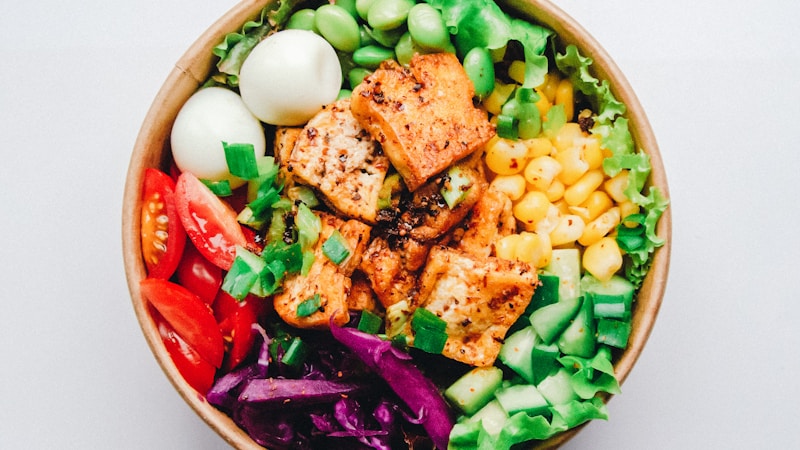
The Plate
Eat whole eggs. The 2015 Dietary Guidelines Advisory Committee removed the 300mg daily cholesterol limit after nearly 50 years, stating that "cholesterol is not a nutrient of concern for overconsumption." A 2018 study in Heart following over 500,000 adults found that daily egg eaters had an 18% lower risk of cardiovascular death. The yolk contains choline, vitamin D, omega-3s, B vitamins, and lutein. Stop throwing it away.
Fatty fish twice a week minimum. Salmon, sardines, mackerel, anchovies. Rich in EPA and DHA omega-3 fatty acids. The VITAL trial found omega-3 supplementation reduced heart attacks by 28% in participants who didn't regularly eat fish. These fats lower triglycerides, reduce inflammation, and improve LDL particle size.
Extra virgin olive oil as your primary cooking fat. PREDIMED showed a 30% cardiovascular event reduction. The polyphenols in high-quality olive oil are potent anti-inflammatory compounds.
Fermented foods daily. Yogurt (plain, full-fat Greek), kimchi, sauerkraut, kefir. The Stanford fermented foods trial (Wastyk et al., 2021) showed these decreased 19 inflammatory markers and increased gut microbiome diversity. Gut health and cardiovascular health are inseparable.
Nuts as snacks, not chips. The Nurses' Health Study: 5+ servings of nuts per week was associated with a 35% lower risk of coronary heart disease. Walnuts specifically improve LDL particle size.
Cut the sugar. Not "reduce." Cut it. Refined sugar and processed carbohydrates are the primary drivers of high triglycerides, insulin resistance, and the shift toward small, dense LDL. This single change will do more for your cardiovascular profile than every egg you've ever avoided.
Ditch the seed oils. Cook with olive oil, butter, ghee, avocado oil, or coconut oil. Read ingredient labels on everything. Soybean oil is in almost every packaged food in America.
The Training
Exercise isn't optional in this protocol. It's the second half of the prescription.
Resistance training 3-4 times per week. Lifting weights improves insulin sensitivity, which addresses the metabolic root cause of bad cholesterol profiles. It reduces fasting insulin, lowers triglycerides, and raises HDL. You don't need to become a powerlifter. Compound movements (squats, deadlifts, presses, rows) with progressive overload. 45 minutes, 3 times a week, will transform your blood panel within 90 days.
Zone 2 cardio 3-4 times per week. Walking, cycling, swimming, or rowing at a pace where you can hold a conversation but wouldn't want to. This is the intensity that preferentially burns fat, improves mitochondrial function, and builds the aerobic base that supports every other metabolic process in your body. 30-45 minutes.
Move throughout the day. Take the stairs. Walk after meals (even 10 minutes post-meal significantly improves glucose response). Stand at your desk. The enemy isn't the absence of gym time; it's the 23 hours of sitting between sessions.
The 90-Day Challenge
Commit to 90 days of resistance training 3x/week, Zone 2 cardio 3x/week, and the dietary changes above. Get a full lipid panel before you start and another one at 90 days. Bring both to your doctor. The numbers will speak louder than any conversation about salads.
The Mindset Shift
Stop lying to your doctor. I know that sounds blunt. But the 2018 JAMA study found that more than half of patients who withheld health information did it because they were embarrassed. Embarrassment is not a medical condition, but the metabolic damage from a decade of undisclosed fast food habits absolutely is.
Your doctor isn't judging you. They're reading your bloodwork and already know. The triglycerides tell them about the late-night takeout. The fasting glucose tells them about the soda. The inflammatory markers tell them about the stress you're not managing. You're not fooling anyone. You're just making it harder for them to help you.
Getting Off Statins: What the Research Shows
If you're already on a statin and want to explore whether lifestyle changes could replace it, here's what the evidence says.
Never stop a statin cold turkey without medical supervision. A study published in ScienceDirect found that just four days after statin discontinuation, LDL cholesterol, total cholesterol, and triglycerides increased by 30%, 18%, and 17% respectively. Your body has been relying on the drug to suppress production, and it takes time to recalibrate.
The path off requires aggressive lifestyle intervention. The Ornish trial showed that intensive lifestyle changes can achieve LDL reductions comparable to statins. But the key word is intensive. We're not talking about adding a salad to lunch. We're talking about a fundamental restructuring of how you eat, move, and manage stress.
Work with your doctor on a supervised step-down. Here's a realistic approach:
- Get an advanced lipid panel as your baseline
- Implement the dietary and training protocol above for 90 days
- Retest with the same advanced panel
- If markers have improved significantly, discuss a supervised dose reduction with your physician
- Retest 60 days after any dose change
- Continue the cycle until you've reached the minimum effective dose, or zero
Critical Caveat
If you've already had a heart attack, stroke, or have familial hypercholesterolemia, statins may be a permanent part of your protocol. The statin step-down approach is primarily for primary prevention patients who were prescribed statins based on risk calculators rather than existing cardiovascular events. Always work with your physician.
The Multicenter Lifestyle Demonstration Project followed 333 patients and found that those in the experimental group avoided revascularization for at least 3 years through comprehensive lifestyle changes, at substantially lower cost, without increasing cardiac morbidity or mortality. That's bypassing bypass surgery through food and exercise.
The Real Conversation We Need to Have
The AHA moved the screening age to 30 because the data forced their hand. Young adults are presenting with metabolic profiles that used to be reserved for 50-year-olds. The food supply is broken. The activity levels are abysmal. And the most popular response to bad bloodwork is still a prescription rather than a conversation about what's actually in the fridge.
The new guidelines recommend "lifestyle changes first" before medication. That's right there in the document. But the system isn't built for lifestyle change. A doctor gets 15 minutes per appointment. Writing a statin prescription takes 30 seconds. Teaching someone to cook, train, and overhaul their relationship with food takes months. The incentive structure pushes toward pills.
So the responsibility falls on you. Not because the system is fair, but because your arteries don't care about what's fair. They care about what you're actually putting into your body every day, not what you told your doctor last April.

"The doctor of the future will give no medicine, but will interest his patients in the care of the human frame, in diet, and in the cause and prevention of disease." Thomas Edison
The bar moved to 30. That's the reality. You can respond to it with a new prescription, or you can respond to it by becoming the kind of patient who doesn't need one. The bloodwork will tell the truth either way.
Stop lying about the salad. Start eating one.


