
Ed Catmull spent twenty years trying to make the first computer-animated feature film. When Toy Story finally arrived in 1995 and became a massive hit, most people assumed the hard part was over. Catmull knew better. The real challenge wasn't making one great film. It was building an organization that could make great films over and over again, without the creative culture collapsing under the weight of its own success.
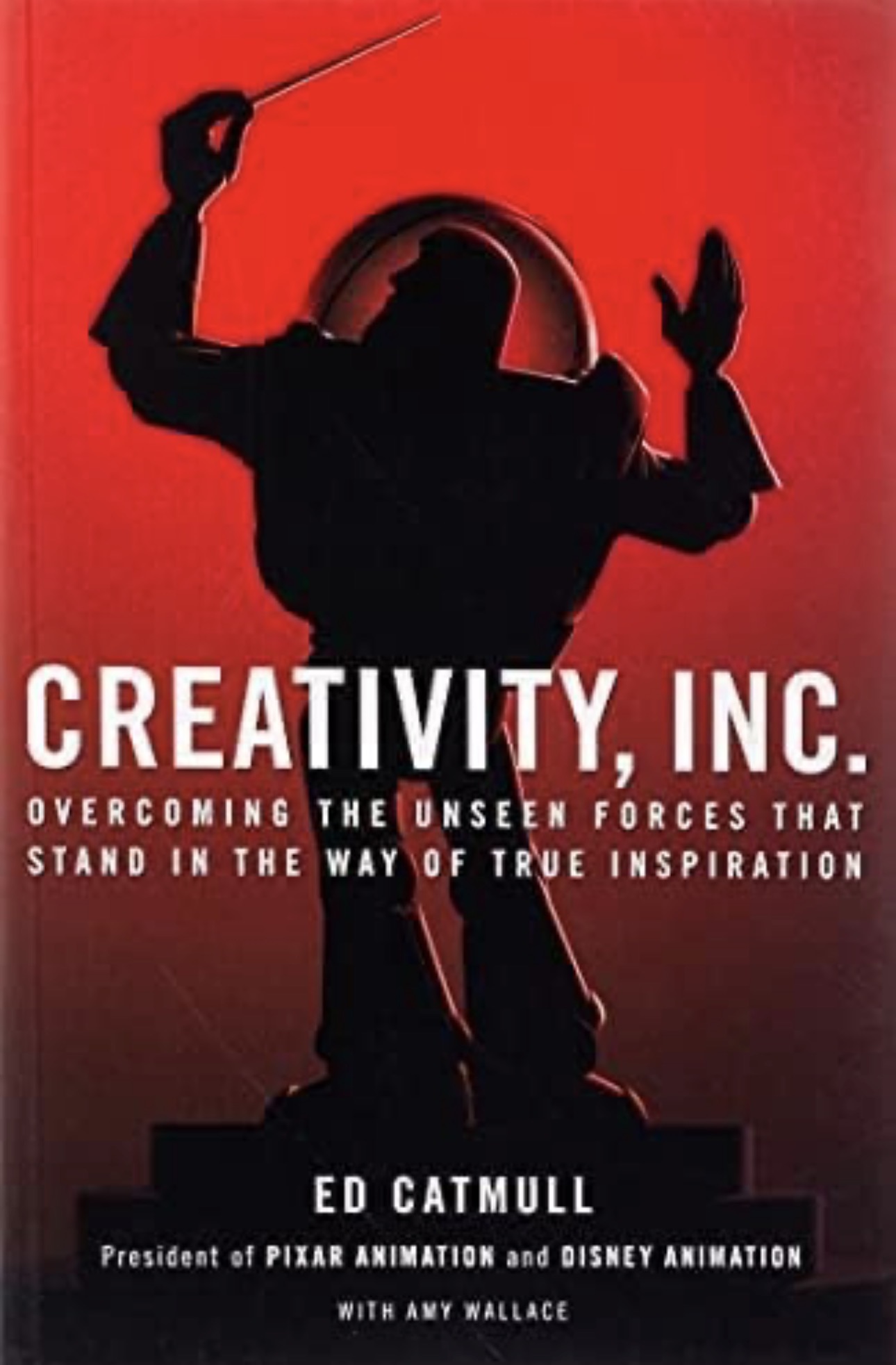
Creativity, Inc. is the result of that obsession. It's not a memoir about Pixar's greatest hits. It's a brutally honest field manual on how creative organizations fail, how leaders become blind to problems right in front of them, and how to build systems that protect originality from the forces that naturally try to kill it. This book sits on my desk, not my shelf, because I keep returning to it.
"To Infinity and Beyond": Ed's Impossible Dream
In 1965, Ed Catmull watched Disney's The Wonderful World of Color and decided he wanted to make animated films. There was one problem: he couldn't draw. So he turned to computers, a field so new that the phrase "computer graphics" barely existed. His PhD work at the University of Utah produced foundational algorithms still used today, including texture mapping and z-buffering. But his real goal never changed: make a computer-animated feature film.
That dream took him from the University of Utah to the New York Institute of Technology, then to Lucasfilm, and finally to Pixar, which Steve Jobs bought from George Lucas in 1986 for $5 million. For nearly a decade, Pixar survived by selling hardware and making commercials. Jobs poured money in. The company nearly died multiple times.
"To infinity and beyond!" That's not just Buzz Lightyear's catchphrase. It's a fair description of what Catmull was chasing for two decades: a goal so audacious that most of the world thought it was delusion.
When Toy Story finally proved the concept, Catmull faced an unexpected crisis. He'd achieved the goal he'd been working toward his entire career. Now what? The answer he arrived at became the foundation for everything in this book: the goal was never just one film. The goal was building a sustainable creative culture. That reframing is what separates Creativity, Inc. from every other business book about Pixar.
"Anyone Can Cook": People Over Ideas
The most counterintuitive insight in the entire book is Catmull's stance on ideas versus people. Most organizations treat ideas as sacred. They spend enormous energy searching for the "right" idea, the perfect concept, the winning pitch. Catmull argues this is completely backwards.
This is the core thesis of the book, and it contradicts almost everything Silicon Valley preaches about vision and disruption. Catmull believes ideas are not precious. People are precious. The right team with strong trust, honest communication, and genuine creative ambition will find their way to a great result no matter where they start. The wrong team will destroy even the most brilliant concept.
In Ratatouille, the food critic Anton Ego delivers one of cinema's great speeches: "Not everyone can become a great artist, but a great artist can come from anywhere." That line could serve as the mission statement for Catmull's entire philosophy. He doesn't care about pedigree or credentials. He cares about assembling people who are smarter than him, giving them the freedom to fail, and creating an environment where candor isn't punished.
The People Principle
Pixar hires for creative potential and collaborative temperament, not just technical brilliance. A single brilliant jerk can poison an entire team's ability to take the risks that great work requires.
"Just Keep Swimming": Failure as Fuel
Here's something most people don't know about Pixar: Toy Story 2 nearly destroyed the company. Originally planned as a cheap direct-to-video sequel, it was so bad midway through production that the entire film was scrapped and rebuilt from scratch in nine months. Nine months to make what became one of Pixar's highest-rated films.
Catmull uses this story to illustrate his most radical belief: mistakes aren't a necessary evil. They aren't evil at all. They're the inevitable consequence of doing something new. If you're not failing, you're not pushing hard enough.

"Just keep swimming," Dory tells Marlin in Finding Nemo, and that line captures something essential about creative work. The ugly middle of any ambitious project feels unbearable. Every Pixar film goes through a stretch where the directors are convinced it's the worst thing they've ever made. Catmull's job isn't to prevent that feeling. It's to create an environment where people can push through it rather than giving up or settling for safe mediocrity.
Pixar's postmortem process reinforces this philosophy. After every single film, the team conducts a thorough review of what went right and what went wrong. Not to assign blame, but to learn. The discipline of examining both successes and failures with equal rigor prevents the organization from developing blind spots.
The Braintrust: Radical Candor Before It Had a Name
If I had to pick the single most valuable concept in this book, it would be the Braintrust. The Braintrust is a group of Pixar's most experienced storytellers who review every film at regular intervals throughout production. Their job is to provide unflinchingly honest feedback about what's working and what isn't.
Two rules make the Braintrust function:
The Braintrust Rules
Rule 1: All feedback is about the project, never the person. You can say "this scene doesn't work" but never "you made a bad scene."
Rule 2: The director is NOT required to follow any of the Braintrust's suggestions. They own the film. The Braintrust offers perspective, not mandates.
This second rule is what makes the whole thing work. When people know their feedback is advisory, not binding, they give better feedback. They focus on identifying problems rather than prescribing solutions. And when directors know they won't be overruled, they listen more openly because the feedback doesn't feel like a threat.

The Braintrust saved multiple films from disaster. Ratatouille was struggling under its original director until the Braintrust sessions helped identify fundamental story problems. Inside Out went through radical restructuring after Braintrust feedback revealed that the emotional core wasn't landing. In each case, the process worked because the feedback was honest, because it focused on the work rather than the person, and because the director retained creative ownership.
The Hungry Beast and the Ugly Baby
My favorite metaphor in the entire book: Catmull describes every organization as containing two competing forces. The Hungry Beast is the established business. It demands constant feeding: sequels, merchandise, release dates, quarterly earnings. The Beast is loud, urgent, and insatiable.
The Ugly Baby is the new idea. It's fragile, misshapen, and embarrassing. It doesn't look like much. Nobody's sure it will survive. But every great Pixar film started as an Ugly Baby.
The Leadership Tension
Organizations naturally protect the Beast and kill the Baby. The Beast has revenue, deadlines, and stakeholders demanding results. The Baby has nothing but potential. A leader's primary job is to reverse this instinct: protect the Baby, manage the Beast.
"Adventure is out there!" shouts young Ellie in Up, and that spirit of protecting new adventures against the safe and predictable is the central leadership challenge Catmull describes. Every organization faces this tension. The companies that only feed the Beast eventually run out of new ideas. The ones that only nurture Babies never ship anything.
The genius of Pixar's system is that it manages both simultaneously. The Beast gets fed through rigorous production pipelines, clear deadlines, and professional project management. The Baby gets protected through the Braintrust, through a culture that doesn't punish failure, and through leaders who actively champion fragile new ideas against the overwhelming pressure to play it safe.
"You Are a Toy!": Mental Models and Hidden Problems
One of the most philosophical chapters in the book deals with mental models. Catmull argues that every leader operates with an incomplete model of reality. We think we see the whole picture. We don't. The biggest threat to any organization isn't the problems you know about. It's the ones you can't see.
"You are a toy!" Woody screams at Buzz Lightyear, trying to shatter his delusion. "I am a space ranger!" Buzz insists, clinging to a model of reality that feels absolutely true to him. We all do this. We construct mental models that feel complete and real, and we defend them fiercely, even when evidence contradicts them.
Catmull offers a devastating example: during one of Pixar's growth phases, he discovered that employees had been afraid to raise concerns about a toxic manager because they believed leadership already knew and was choosing to ignore the situation. Leadership didn't know. The model was wrong. And the gap between reality and the leadership's mental model had been causing real damage.

His solution is radical for a CEO: assume your model is wrong. Actively seek out disconfirming information. Make it structurally safe for people to tell you uncomfortable truths. And when you discover your model was wrong, treat it as valuable data rather than personal failure.
This connects to what Catmull calls the "unmade future." You cannot plan creativity. You can only create the conditions for it and then get out of the way. Leaders who try to control creative outcomes end up controlling creative people out of doing their best work.
Who Must Read This Book
This book is essential reading for:
- Leaders building teams who want honest feedback loops, not just yes-people
- Founders and executives navigating the tension between shipping products and nurturing innovation
- Creative professionals who want to understand why some studios produce hit after hit while others flame out
- Anyone managing people who wants a framework for making it safe to take risks and fail
- Readers of CEO Excellence who want to see the "people over strategy" principle applied at the highest level

The Bottom Line
Creativity, Inc. doesn't just explain how Pixar works. It explains why most creative organizations fail and provides a practical blueprint for preventing that failure. Catmull's honesty about his own blind spots, his own mistakes, and his ongoing struggle to maintain a healthy culture is what elevates this from a good business book to one of the most important I've ever read.
The Braintrust alone is worth the price of the book. But it's the deeper philosophy that stays with you: the idea that quality is not a destination but a practice, that your mental models are always incomplete, that the people matter more than the ideas, and that protecting fragile new things from the forces of safety and convention is a leader's most sacred responsibility.
"Our fate lives within us," Merida says in Brave. "You only have to be brave enough to see it." Ed Catmull's entire career proves she was right.
Rating: 10/10
One of the most important books on leadership, creativity, and organizational culture ever written. Not just for animation fans. For anyone who builds things with other people.
Book Details
Author: Ed Catmull with Amy Wallace
Published: 2014 (Random House)
Pages: 368
Best for: Leaders, founders, creative professionals, anyone who builds teams